• HOME
  • TOUR
  • BIO
  • Director Bio
  • TV/FILM
  • Media
  • GALLERY
  • CONTACT
  • Beacon of Insignificance

Monthly Archives: March 2026

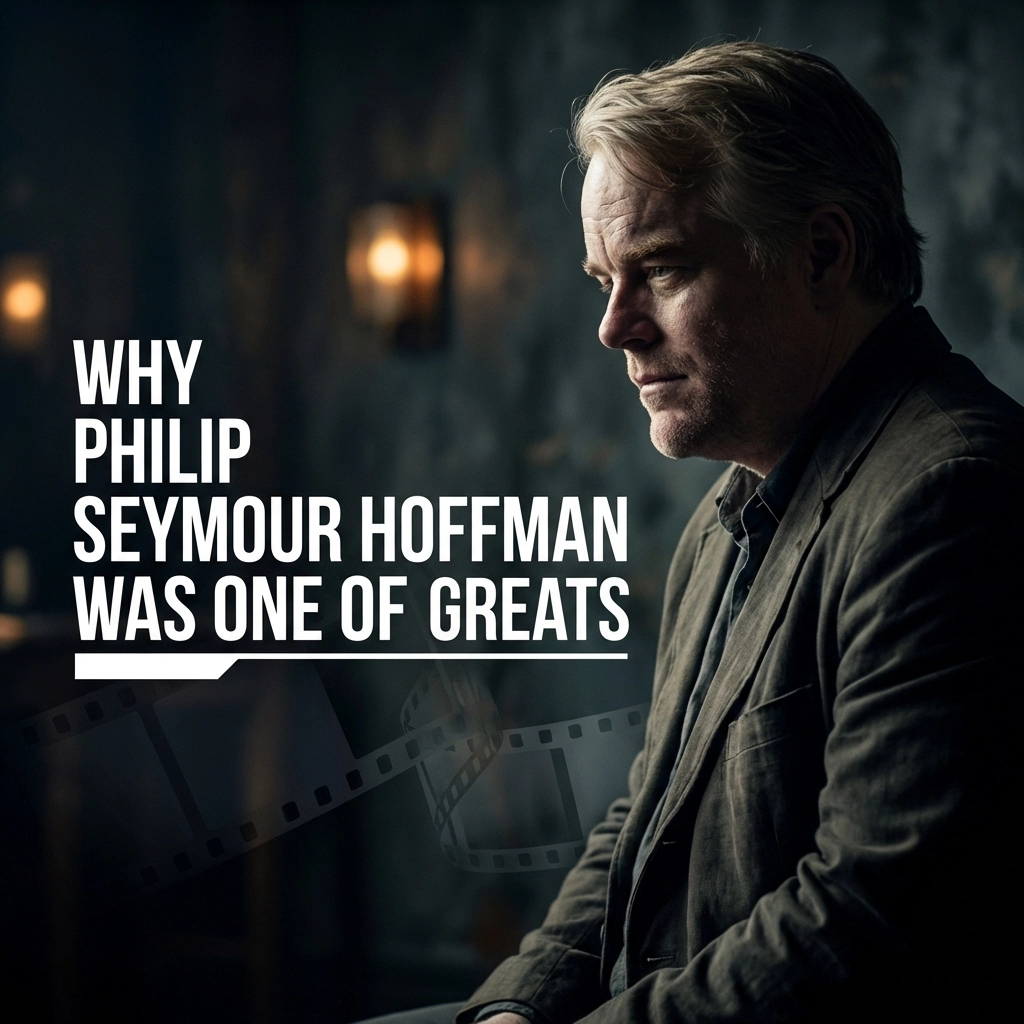
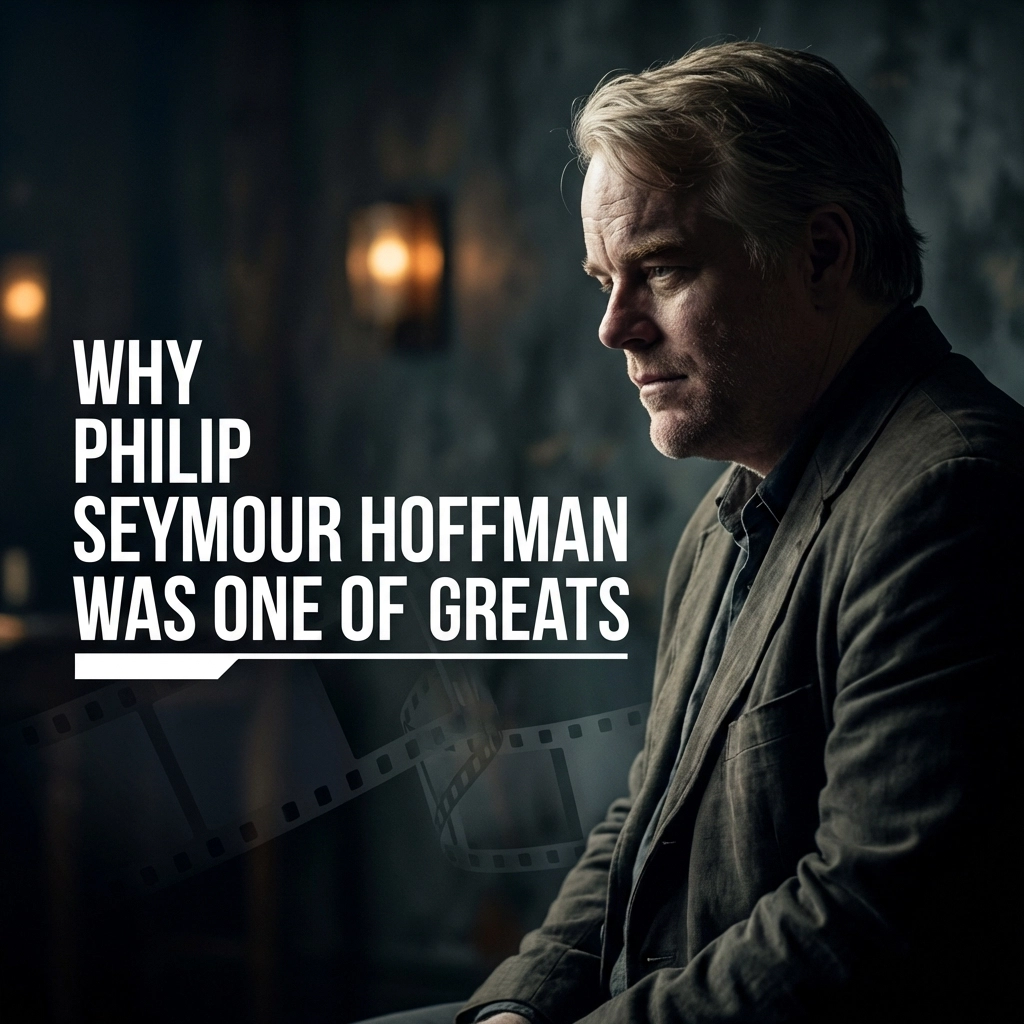
Why Philip Seymour Hoffman Was One of the Greats
March 5, 2026 by PennyBlogWriter

heroImage

When you hear “leading man,” Philip Seymour Hoffman probably isn’t the first face that pops into your head. No chiseled jaw, no heroic slow-motion walk. And that’s exactly why he became one of the greatest actors to ever do it.

While other actors were busy perfecting their angles, Hoffman was busy becoming people. Not characters — people. He had this ability to disappear so completely that you’d forget you were watching an actor at all.

His range was borderline unfair. One minute he’s the deeply uncomfortable phone-sex operator in Happiness, and the next he’s Truman Capote, floating through rooms with eerie precision. He never showed off. He just showed up, fully formed, every time.

When I first moved to New York, I was lucky enough to study with an incredible acting teacher named Scott Hudson. Scott wasn’t just a great teacher — he was also the guy who introduced me to Philip Seymour Hoffman. This was before the legend calcified. He had just come off Boogie Nights. Magnolia was shot but not out yet. He was still doing small parts and theater, including True West at Circle in the Square with John C. Reilly.

Scott invited me to that production. It was one of the first times I’d ever been in a room where everyone was someone. I sat in the corner like a confused houseplant and just listened. Sam Shepard held court, talking shop like it was a backyard barbecue. I was completely floored that this world existed.

Scott kept inviting me along — plays Philip directed, plays he acted in — and then, slowly, we stopped seeing him around. Not because he vanished, but because his career exploded. Suddenly he was just in the movies. Everywhere. Always great.

What really separated Hoffman was that he never played answers — he played people. Take Doubt. A lesser actor turns that priest into either a saint or a villain. Hoffman makes him human, complicated, conflicted. You leave the movie still arguing with yourself about what actually happened. He trusted the audience to sit in discomfort, and that takes real confidence.

Hoffman wasn’t larger than life. In a business obsessed with impossible beauty, he showed up looking like a guy who’s late on rent. And because of that, everything landed. When he loved, failed, spiraled, or tried to explain himself out of a corner, you believed him. Not movie-believed. Real-believed.

Almost Famous is a perfect example. As Lester Bangs, he’s dispensing wisdom, but when he talks about loneliness and not mistaking access for friendship, you lean in. Because this guy lived it.

And then there’s A Most Wanted Man, one of his most underrated performances. He’s chain-smoking, quietly terrifying — a bureaucratic tough guy whose weapon isn’t fists, it’s patience. The cigarettes aren’t a quirk; they’re a tell. Also: he somehow had a better German accent than half the actual Germans in the film, which is unfair but very on brand.

One thing you had to admire about Hoffman: the guy was absolutely fearless when it came to choosing roles. While other actors were calculating their careers like chess grandmasters, Hoffman was picking projects other people wouldn’t touch. Happiness? Dark as midnight and twice as disturbing. Punch-Drunk Love? The Master? He didn’t just take these roles — he attacked them.

Here’s a part of Hoffman that doesn’t get talked about enough: the guy was a theater animal. Not a movie star who popped onto a stage for credibility, but a real, working stage actor who loved the grind. Three Tony nominations. Directed 19 productions. Nineteen. That’s not dabbling.

Death of a Salesman is the big one. His Willy Loman wasn’t some grand tragic figure — he was heartbreakingly familiar. The kind of performance that makes you uncomfortable because it feels like you’re watching your own dad unravel in real time. And it wasn’t just that role. He tore into True West, Long Day’s Journey Into Night, Othello, The Seagull — heavy lifts, no shortcuts. Every time, he disappeared the same way he did on film.

Watching that part of his career always lit a fire under me. Hoffman made it clear there was no finish line, just deeper levels. He didn’t chase “leading man” status; he chased truth. And seeing how hard he worked made me want to work harder too. Not to be famous. Just to be better.

So why was Philip Seymour Hoffman one of the greats? Because he understood something a lot of actors never do: the job isn’t to be hot, cool, or Instagram-able. The job is to be true to the role. He just showed up, dug around in the mess, and found the human being inside it. In an industry obsessed with image, Hoffman was obsessed with honesty. And audiences don’t actually need perfect — they need real. Perfect is boring.

Most actors were busy performing. Hoffman was just being.
My Hero(s)

March 3, 2026 by mark124

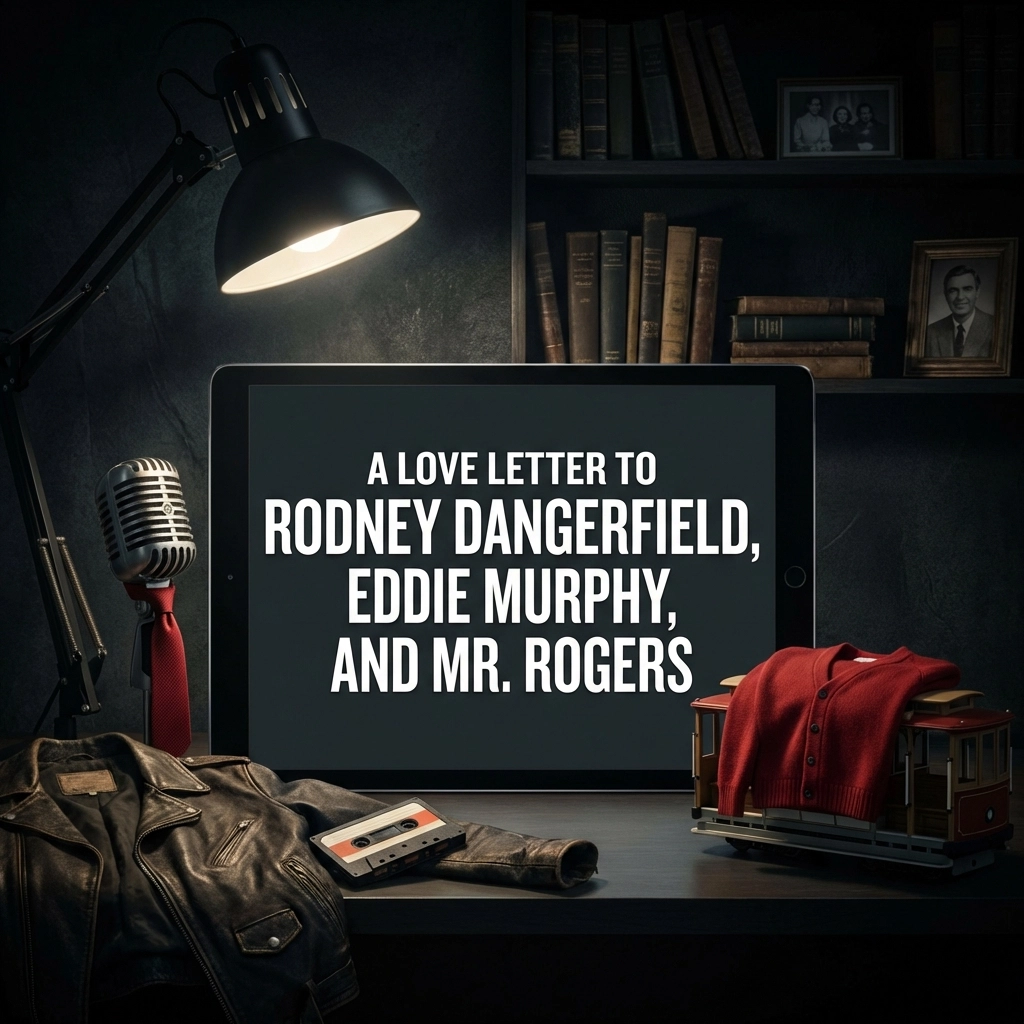
A Love Letter to Rodney Dangerfield, Eddie Murphy, and Mr. Rogers

heroImage

This is a love letter to Rodney Dangerfield, Eddie Murphy, and Mr. Rogers.

Which sounds like the beginning of a joke, a threat, or the world’s most confusing Mount Rushmore, but stay with me.

These three live permanently in my head. They’re the voices arguing while I’m trying to write a bit or shape a piece. One demands precision. One demands electricity. One quietly asks if any of it actually matters. Somehow, they all have a point.

If you’ve ever tried to make something, you know there are always voices in your brain. Mine just happen to wear a red tie, red leather pants, and a cardigan.

Let me explain.

Rodney Dangerfield: The Gold Standard

Rodney is the gold standard — favorite jokes, sure-fire timing, and a ton of charisma.

I still don’t know what’s better: his stand-up or his films. That’s the highest compliment you can give an entertainer. Most people peak in one lane. Rodney paved all of them.

Every word was sharp. Every pause intentional. He wasn’t begging for laughs; he was demanding them, then acting surprised when they showed up.

“I get no respect” wasn’t just a tagline. It was a philosophy. A way of life that made self-deprecation feel like a superpower. And those early movies — Caddyshack, Back to School, Easy Money — are comedic blueprints. No wasted motion. Just relentless precision. He could walk into a scene, say twelve words, and own the frame. That’s not luck. That’s decades of bombing, rebuilding, and refusing to quit. Ten thousand hours, right? Ends up with two good ones, but man, those two count.

When I sit down to write, Rodney is the voice that says: Is the joke tight? Is every word pulling its weight? Cut the fat.

He’s the editor in my head who won’t let me get lazy. He’s exhausting, but he’s right.

Eddie Murphy: Pure Electricity

If Rodney is precision, Eddie Murphy is electricity with a perfect smile.

Eddie doesn’t even have to do anything — I’d watch him sit in a chair and just think. But the thing is, he does everything. Beverly Hills Cop. Dolemite Is My Name. Stand-up specials that still hold up forty years later. Characters, impressions, act-outs so fast they feel illegal.

There’s a moment in Delirious where he does an impression of his aunt falling down the stairs. It’s thirty seconds long. It shouldn’t be that funny. It’s just a man in a red leather suit pretending to tumble. But it’s transcendent. It’s the kind of comedy that makes you angry if you’re a comic, because how is he doing that? How is it that easy for him?

(It’s not easy. He just makes it look that way.)

Eddie proved you could be cool, fearless, and brilliant all at once. He made comedy look dangerous and fun. There’s a swagger to his work that never feels arrogant — like he’s letting you in on something wild.

When I’m writing and a joke is technically fine but feels dead on the page, Eddie is the voice that says: Okay, but is it alive? Stop telling us. Show us.

He’s the one pushing me to take risks and commit fully.

Mr. Rogers: The Quiet Anchor

And then there’s Fred Rogers. The quietest influence, but the strongest one.

This is where it gets weird, I know. What’s a guy in a cardigan doing next to two of the greatest comedians who ever lived? But that’s the point. Mr. Rogers isn’t in my head to be funny. He’s there to ask the harder question: Yeah, but does it mean something?

Everything Mr. Rogers did was built on a pure moral foundation, and he never wavered. Not once. He genuinely cared about people, kids, and feelings. He didn’t chase laughs or applause. He stood for something and let everything else fall where it may.

There’s that famous story of him testifying before the U.S. Senate in 1969 to save funding for public television. He didn’t argue or yell. He just talked, calmly and sincerely, about the emotional lives of children. And he won. Not because he was clever, but because he meant every word.

That’s the part of creativity people don’t talk about enough. The why. You can write the perfect joke and deliver it with electric energy, but it’ll still feel hollow if there’s nothing real beneath it.

Mr. Rogers is the voice that keeps me honest. The one that asks: Are you making something you actually believe in, or just something that works?

The Noise That Makes Sense

So when I sit down to work, that’s the room in my head: Rodney demanding the joke be tight, Eddie pushing it to be alive, and Mr. Rogers quietly asking if it means something.

They have almost nothing in common on the surface. But they share authenticity. Rodney was authentically the guy who never got a break. Eddie was authentically the kid from Long Island who walked into Hollywood like he owned it. Mr. Rogers was a gentle man who genuinely believed in kindness.

And when it all clicks — when the joke is tight, the delivery has life, and it actually means something beyond the laugh — it feels like all three of them nod and say, Okay. Now you’re onto something.

And that’s enough to keep going.

Mix Tape era

March 3, 2026 by mark124

For anyone my age who has ever made a mixtape: this is an idea I was messing with for my book. It got axed, so I played with it to post and hopefully start a conversation with the people of Facebook.


The premise: making a mixtape of the top three songs of every year since my birth.

So here’s a fun idea: let’s take a musical journey through every year since 1981 — my birth year, because obviously the universe began then — and look at Billboard’s top three songs each year. Simple, right?

Turns out, tracking down Billboard’s official year-end top threes for every single year since Reagan was president is like trying to find a drink in parts of Utah: theoretically possible, but surprisingly elusive. I spent a day doing this (avoiding real work in the process) to write this chunk, which will decidedly not make the book. However, I enjoyed doing it, and writing it took three days. I can’t let it go to waste. Hopefully at least one person reads it instead of blindly scrolling.

Decade Snapshots

1980s: Synths, Sass, and Shoulder Pads

Scrolling through the lists and realizing I need to hear songs I haven’t thought about in decades, the early ’80s delivered some absolute bangers. “Physical” by Olivia Newton-John ruled 1981 like a spandex-clad dictator teaching an aerobics class at LA Fitness, while “Bette Davis Eyes” had everyone wondering what those eyes actually looked like. (My dog has Joan Crawford eyebrows, does that count?) It sounded like it beamed in from an alternate universe where people didn’t clear their throats before singing, and everyone wore more leather and had better cheekbones.

I’m not going to be that guy who claims music was better “back in my day.” Every generation thinks their soundtrack was superior — until they catch themselves belting out “Call Me Maybe” alone in traffic. (Okay, guilty, but come on, it’s catchy.)

Still, it’s fascinating to trace the yearly anthems. “Hard to Say I’m Sorry” (1982) turned Chicago — the once-jazz-rock rebels with a killer horn section (big fan of horns in rock) — into the kings of soft-rock apologies. Then came 1983, when The Police topped the charts with “Every Breath You Take,” the all-star stalker anthem disguised as a love song.

The ’80s were pure neon insanity. MTV was new, cocaine was “just a pick-me-up,” and fashion looked like everyone lost a fight with a lawnmower. Madonna turned sex appeal into an outfit, Prince made weird sexy, and Michael Jackson moonwalked straight into pop immortality. “When Doves Cry” was an existential crisis you could dance to, and “Every Rose Has Its Thorn” taught us that even guys in eyeliner and silk shirts have feelings.

1990s: Flannel, Feelings, and the Macarena Economy

The ’90s hit like puberty for pop culture inside a coffee shop with terrible ventilation. One minute we were slow-dancing to “End of the Road” by Boyz II Men, and the next we were screaming “Smells Like Teen Spirit” in a basement.

We had power singers: Whitney owned the early years, Mariah hit notes that shouldn’t legally exist, and TLC warned us about chasing waterfalls while inspiring every Halloween costume for girls who didn’t want to dress up.

Then came “Macarena” — a song/virus so catchy it convinced millions of adults to publicly perform synchronized pelvic thrusts at weddings while mumbling gibberish and riding an invisible swing.

2000s: The iPod Generation

The 2000s were chaotic. Napster blew up the record industry, and suddenly everyone with a dial-up connection and a chin beard was a music critic. The idea of growing as an artist seemed secondary; it all became about one or two singles rather than cohesive albums.

“Hey Ya!” was art disguised as a dance-floor must, “Crazy in Love” made Beyoncé a deity, and “Umbrella” made Rihanna royalty. Meanwhile, Nickelback, Creed, and Linkin Park dominated radio like a fungus nobody asked for, and “Hollaback Girl” taught an entire generation how to spell “bananas.”

2010s: Algorithms and Emotional Terrorism

By the 2010s, music had fully merged with the internet. I suffered from serious cultural lag due to relentless touring on the road. I didn’t discover songs — Spotify’s algorithm found me at 3 a.m. when it apparently decided I was depressed enough to relate to Adele’s divorce.

“Uptown Funk” convinced me I could still (try to) dance, and Ed Sheeran’s “Shape of You” became so omnipresent it started playing inside my dentist’s thoughts. Pop stars were no longer people; they were corporations with publicists, engineering every chorus in a lab.

2020s: Everything, Everywhere, All at Once

Now we live in musical chaos theory. Genres don’t exist — just vibes and anxiety. Billie Eilish whispers her trauma, Taylor Swift controls the global economy with friendship bracelets, and half of TikTok thinks Fleetwood Mac is a new indie band.

We’re in an age where nostalgia remixes nostalgia. (What’s next, a reboot of Happy Days?) Your playlist can go from Sinatra to Slayer without warning. If the ’80s were hairspray and keytars, the 2020s are FaceTime and ring lights.


The Spotify Problem

Back then, Billboard measured actual sales and radio spins — tangible proof of what people were buying or begging DJs to play. No waiting for Casey Kasem to count backward from 40, which was a nightmare for a dyslexic kid who needed a physical chart just to see the big picture.

The downside now is that the shared cultural soundtrack is gone. When’s the last time you could bet everyone at a party knew the exact same song that wasn’t twenty years old? Now it’s just a room full of people showing each other obscure tracks that formed in the basement of a Buddhist church in Chattanooga.

Revisiting old Billboard hits is like flipping through old photo albums. Songs become timestamps: “That was our wedding song.” “That played the week we won the league.” “That was my Caesar haircut phase.” Some tracks age like fine wine, while others age like milk left in the glove box of a muscle car in July.

Maybe the real treasure isn’t the list itself. It’s remembering that music has always been this glorious rigmarole where art and money collide, and someone’s Tuesday afternoon in a studio becomes someone else’s first kiss. Diana Ross and Lionel Richie should probably pay child support for half the kids conceived over their slow jams.

Every year since I’ve been alive, somebody wrote a song that made someone fall in love, break up, cry, or dance like an idiot at a school function. Billboard just tallied the aftermath.

The real chart lives in your car stereo, your headphones, and that one song that still hits like it was written just for you. My personal walk-on music? Probably Doc Watson’s “Windy and Warm” (not what you expected, I know).

Recent Posts

  • Forever Young: Why Rod Stewart Puts Me in a Parenting Predicament
  • The Soundtrack That Built Me
  • life rules
  • Best Opening Scenes
  • “Hey, It’s That Guy!”: A Tribute to the Most Prolific Character Actors

Archives

  • July 2026
  • June 2026
  • May 2026
  • April 2026
  • March 2026
  • February 2026
  • January 2026
  • November 2023
  • May 2018
  • July 2017
  • March 2017
  • December 2016
  • November 2016
  • August 2016
  • September 2015
  • July 2015
  • July 2014
  • April 2014

Join The Community!

Need a laugh? I will send you schedules for tours, fun clips, and other news (but not to worry, I'm lazy, so only a couple of times a year!) Join the mailing list here!

Follow Me


2018 © Copyright @ MARK RICCADONNA –  All Rights Reserved