• HOME
  • TOUR
  • BIO
  • Director Bio
  • TV/FILM
  • Media
  • GALLERY
  • CONTACT
  • Beacon of Insignificance

mark124

“Hey, It’s That Guy!”: A Tribute to the Most Prolific Character Actors

May 5, 2026 by mark124

[HERO] "Hey, It's That Guy!": A Tribute to the Most Prolific Character ActorsYou’re watching a movie and suddenly someone appears on screen and you involuntarily point at the television like a caveman discovering fire.
“Hey! It’s that guy.”

You know the face. You’ve seen it in at least seventeen other things. He’s been a boss, a neighbor, a henchman, a dad, a guy named “Frank.” But the name? The name is buried deep in the filing cabinet of your brain,You know the guy from that thing…. with the other guy we like… He says that line… ahh come on don’t make me IMDB him!? and as you do that when it pops into your head…. Gary Oldman…. Gary Oldman

Welcome to the world of character actors — the unsung heroes of film and television. The people who show up, steal the scenes they’re in, and disappear into the next project before you can properly appreciate them. They’re not the ones on the poster. They’re the reason the poster works. My example of Gary Oldman is the master of this.

Think about your favorite movies. Sure, you remember the lead performance. But wasn’t there someone on the edges — a quirky boss, a menacing henchman, a wise-cracking best friend — who made the whole thing feel real? That’s the character actor doing their job so well you don’t even notice the job being done.

Stephen Root: The Man of a Thousand Faces (and Accents)

Let’s start with Stephen Root, a man who may actually be in more projects than oxygen. You know him as Milton from Office Space — the soft-spoken, stapler-loving employee who eventually burns the building down, which, frankly, felt less like a plot twist and more like a workplace wellness decision.

But that’s just one face. Root has also been the magazine editor in Dodgeball, the perpetually exhausted station manager on NewsRadio, and — this part still blows my mind — a character actor on an animated show. On King of the Hill, he’s not just doing a voice; he’s doing characters. Plural. Recurring, specific, fully lived-in people. Being a character actor in animation feels like the final boss level of the job, and Stephen Root just casually lives there.

More recently, he’s been quietly terrifying on HBO’s Barry as Monroe Fuches, a performance that works because he brings the same care to menace that he’s always brought to comedy. I genuinely love watching him work. There’s never a wasted beat, never a lazy choice. Even when he’s playing someone awful, you can feel the craft underneath it, humming along.

Over the years, he’s played blind radio hosts, creepy dentists, authority figures with hidden rot, and that guy at the party who knows way too much about Civil War history and somehow makes it everyone else’s problem.

With more than 250 credits to his name (and that’s not even counting the voices), he’s worked steadily since the 1980s, popping up everywhere from No Country for Old Men to Get Out to that one episode of your favorite show you vaguely remember liking. He’s everywhere. He’s always great.

We should probably send him a fruit basket. Or at least say his name out loud once in a while.

M. Emmet Walsh: The OG Character Actor

Before Stephen Root was everywhere, M. Emmet Walsh was already there. Walsh has been acting since the 1960s, and his face isn’t just familiar — it’s documented.

He’s the private detective in the Coen Brothers’ Blood Simple. He’s the guy who gets shot five minutes into Blade Runner, and decades later, he turns up in Knives Out, because if you’re going to build a modern whodunit, you need at least one guy who looks like he’s already solved it and hates you for asking.

Walsh specializes in authority figures who’ve seen too much, trust no one, and gave up on hope somewhere around Nixon’s second term. Cops, military brass, government officials, and that uncle at Thanksgiving who doesn’t say much — but when he does, the room goes quiet.

His face tells a story before he opens his mouth, and it’s never a good one. It’s disappointment, cynicism, and the faint scent of cheap coffee, old files, and a county office that definitely lost your paperwork on purpose. You don’t cast M. Emmet Walsh to reassure the audience. You cast him to let them know things are about to get legally complicated.

And let’s be honest: there’s no way Dan Aykroyd didn’t channel him when he made Nothing But Trouble. That movie feels like what would happen if an M. Emmet Walsh character got absolute power, and nobody stepped in. It’s pure Walsh energy filtered through nightmare makeup and cocaine-era confidence.

The man is well into his late eighties and still working, which isn’t just impressive — it’s amazing. Because character actors don’t retire. They don’t soften. They just get older, stranger, and more convincing as someone who knows where the bodies are buried.

Judy Greer: The Best Friend in Everything

I’m especially excited about this one, because when we talk about character actors, we usually mean older white guys who look like they’ve been carrying a clipboard since the Carter administration. This is different. This is Judy Greer — and she might be the most consistently watchable person in modern movies.

She’s in everything. And she’s almost always everyone’s best friend.

You absolutely recognize her. Immediately. But you will still pause the movie, open IMDb, and mutter, “What is her name again?” If you’ve watched a movie or TV show in the last twenty years, Judy Greer was probably in it, slightly off to the side, quietly holding the whole thing together.

She’s played the best friend so many times that “Best Friend” should honestly just be her job title: 13 Going on 30, 27 Dresses, The Wedding Planner, The Descendants, Ant-Man, Jurassic World, Arrested Development, and Archer (where she voices Cheryl, a character who feels like what would happen if a best friend finally snapped). And she’s probably in whatever you’re watching right now — feel free to check.

What makes Greer special is that she’s perfected the art of being the person you’d actually want to hang out with. While the leads are off having breakthroughs, meltdowns, or saving the world, she’s delivering the perfect line, giving solid advice, or reacting like a real human being.

And the range is no joke. Comedy, drama, action, horror — The Descendants, Planet of the Apes, the Halloween franchise — she does it all. She’s the Swiss Army knife of actors: endlessly useful, completely reliable, and somehow easy to overlook until the second you need her. Which is exactly how great character actors work.

Luis Guzmán: The Face of a Thousand Stories

Luis Guzmán is one of those rare actors who can play two men on opposite ends of the moral spectrum and make you believe both of them completely. Nowhere is that clearer than when you put Carlito’s Way and Boogie Nights side by side.

In Carlito’s Way, Guzmán plays Pachanga, a character who feels like he’s been raised by the street. He’s cautious, grounded, always scanning the room. There’s loyalty there, but it’s practical loyalty. Guzmán gives Pachanga a quiet intelligence, a sense that he understands the rules of this world even if Carlito refuses to. He’s not flashy. He’s survival-minded. Every look says, I’ve seen this movie before, and it doesn’t end well.

Then there’s Boogie Nights, where Guzmán plays Maurice T.T. Rodriguez — and this is a completely different kind of animal. Maurice isn’t dangerous. He’s desperate. He’s a hanger-on who wants to belong so badly that he keeps humiliating himself in public. Where Pachanga moves with caution, Maurice barges in with forced confidence. Guzmán lets you see the insecurity leaking through the bravado in real time. You don’t fear Maurice. You cringe for him.

That’s the magic trick. In Carlito’s Way, Guzmán is the guy you trust because he knows when to shut up and step back. In Boogie Nights, he’s the guy you trust because he’s incapable of hiding who he is. One character survives by restraint. The other destroys himself through exposure.

Same face. Same voice. Completely different internal engines.

Most actors rely on transformation — accents, weight changes, tics. Guzmán does something harder. He adjusts the temperature. He shifts where the character is hurting and how much they’re willing to show it. That’s range with 100 percent truth.

J.K. Simmons: Late Bloomer Who Conquered Everything

J.K. Simmons is one of the greats in modern acting. For years, he was that guy — the face you recognized instantly but couldn’t quite place. I always knew him as the psychiatrist on Law & Order, the guy who shows up for eight minutes and somehow feels like he’s been there all season. Then he was the white supremacist on Oz, a role so unsettling it permanently reprogrammed how I felt about him. What a great job on such an awful person, that role was dark (no pun intended).

From there, Simmons didn’t just work — he bloomed. Not into a traditional leading man, but into something better: a leading man who still was a character actor.

Look at the range.
In Oz, he’s terrifying — cold, ideological, cruel in a way that doesn’t ask for forgiveness.
In Spider-Man, as J. Jonah Jameson, he’s loud, funny, bullying, and somehow lovable while still being a complete nightmare of a boss.
In Juno, he’s a gentle, emotionally present father, the kind who says very little and somehow says everything.
In Burn After Reading, he’s a deadpan CIA superior who treats chaos like paperwork.
In Whiplash, he’s an abusive music teacher so intense it feels like the movie itself is afraid of him.
And somehow, in between all of that, he’s also the reassuring voice of a yellow M&M and the guy selling you insurance.

That’s the thing about Simmons: even when he’s playing a complete asshole, there’s still something human in there. You like him and don’t like him at the same time. He projects warmth and menace simultaneously. You feel safe listening to him — right up until you don’t. I can’t fully explain how he does that, i t’s the mystery that makes him electric.

He spent decades showing up, delivering elite work, and being quietly essential. Then Whiplash happened. Simmons won every award imaginable and finally got his Oscar — at age 60. Not as a comeback. As a recognition. He’s proof that longevity, patience, and craft still matter.

The Ones Who Make Everyone Else Look Good

Here’s the thing about character actors: they make stars look like stars. Stephen Root, Judy Greer, or anyone else supporting a lead instantly raises the game, because they actually know what they’re doing.

▼ The “I Know That Face” Mount Rushmore (No Offense to Actual Mountains)

Shea Whigham is the human embodiment of “Wait, I’ve seen him be stressed out in, like, five different decades.” He shows up in Boardwalk Empire, True Detective, Fargo, Joker, The Wolf of Wall Street—usually as a guy who’s either about to deliver bad news or receive it (often both).

Shea Whigham

William Fichtner has made an entire career out of playing “competent guy with a little menace on the side.” He’s popped up in Heat, Armageddon, Black Hawk Down, The Dark Knight, and, of course, Prison Break, where he’s so intense you can practically hear the fluorescent lights buzzing.Heat, Armageddon, Black Hawk Down, The Dark Knight, and of course Prison Break I find it funny that he was so popular within the acting community. I am noticing leading men who resemble him. He has become his own type.

William Fichtner

Richard Jenkins is the patron saint of “quietly carrying the entire movie while the lead is busy having a breakthrough. He is easily one of my favorites. When he shows up in the film, you go ” Oh wait, it’s about to get good (or funny)”. He has the chops to pull off any part, comedy, drama, or horror.” Six Feet Under, The Visitor, Burn After Reading, Step Brothers, Meet the Parents, The Shape of Water—he’s got the rare skill of feeling like someone you already know.

Richard Jenkins

Ann Dowd is what happens when a character actor can shift the whole mood of a scene just by standing there. She’s incredible in The Leftovers and The Handmaid’s Tale, and she’s one of those performers where you recognize the face and immediately think, “Oh good—this part is about to get real.”

Ann Dowd

James Hong has been showing up in everything since 1954 — Big Trouble in Little China, Blade Runner, Kung Fu Panda — and finally got his moment in Everything Everywhere All at Once at age 93.

Margo Martindale embodies everything great about this work. Emmy-winning, scene-stealing, endlessly reliable — from The Americans to Justified to August: Osage County, she elevates every project just by being in it. Even BoJack Horseman acknowledged it: “That’s esteemed character actress Margo Martindale.” Enough said.

They Deserve More Statues

The Academy loves giving Oscars to character actors in supporting roles: Chris Cooper (Adaptation), J.K. Simmons (Whiplash), Ke Huy Quan (Everything Everywhere All at Once). But those moments are the exception, not the rule.

For every one of them, dozens more are quietly doing brilliant work that only film nerds notice — or people pointing at their TVs yelling, “Hey! That’s that guy!” Clancy Brown, for example, has been the villain in The Shawshank Redemption and Starship Troopers, plus he’s the voice of Mr. Krabs in SpongeBob SquarePants, and he’s never sniffed an Oscar. That’s a crime against cinema.

The beautiful thing? Character actors don’t seem to care. They’re the ultimate professionals: proof that sometimes the work itself is the reward.

A Toast to the Faces We Know

So here’s to the character actors: the Stephen Roots, Judy Greers, and Luis Guzmáns of the world. The ones who show up, nail it, and move on to the next thing. The ones who are always working because everyone wants them in their project.

These are the people who inspire me as an actor. I’ve always tried to approach my jobs the way they do — with focus, with curiosity, and with a refusal to make it about ego. And the best part? While all the leading men are doing sit-ups and push-ups on break, I’m perusing the craft table without a care in the world, quietly learning, quietly observing, quietly working on my next move.

Next time you’re watching something and spot one of these familiar faces, take a moment to appreciate what they’re doing. They’re building the world; they’re the reason you believe the story. And if you run into any of them at a bar (unlikely, but hey, you never know), buy them a drink.

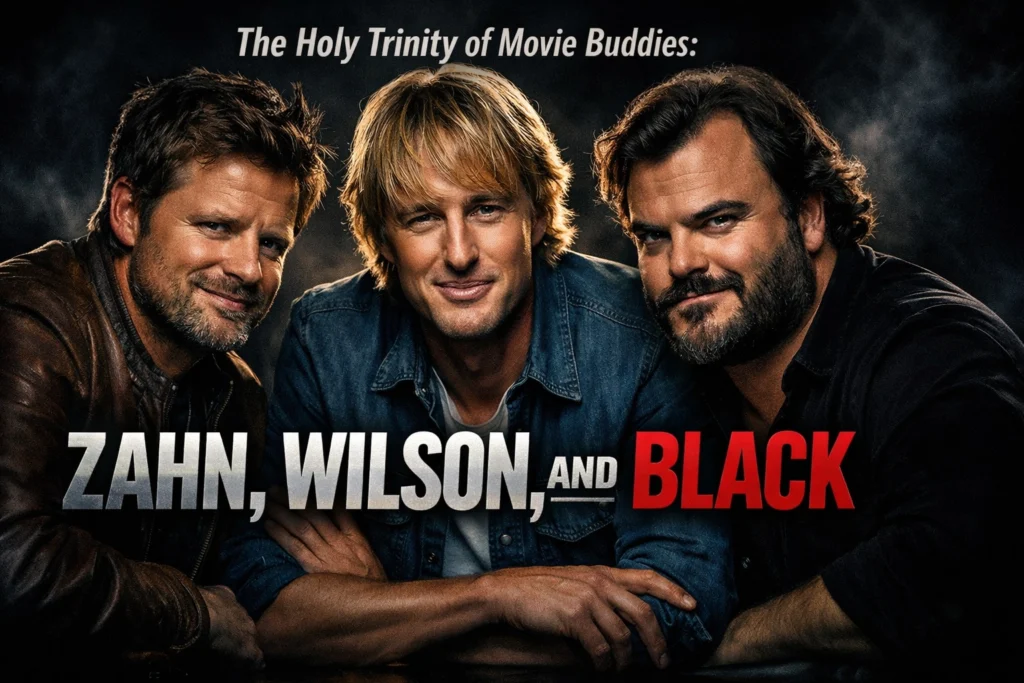
The Holy Trinity of Movie Buddies:

April 10, 2026 by mark124

Zahn, Wilson, and Black

[HERO] The Holy Trinity of Movie Buddies: Zahn, Wilson, and Black

Every great movie needs a hero.
But every memorable movie needs the guy standing next to the hero, leaning in, and saying something wildly inappropriate at exactly the wrong moment. That’s me.

I’m talking about the buddy.
The sidekick. This is me.
The chaotic best friend whose sole job is to make the lead look like they have their life slightly together by comparison. Oh, this is so me!

It’s a sacred role in cinema. And three guys absolutely mastered it: Steve Zahn, Owen Wilson, and Jack Black, and I am jealous how well they pull it off.

These aren’t your leading men. These are your best men.
The guys you actually want at your wedding, your road trip, your “this seemed like a good idea at the time” decision.

Owen Wilson perfected the art of slowly walking up, squinting at trouble, and delivering the most honest line in cinema history:
“Wow.”

Steve Zahn is the patron saint of beautifully unhinged sincerity. Whether he’s yelling “I quit!” in That Thing You Do! or unraveling onscreen with lovable panic, he’s the guy who makes the movie feel a little sweaty. A little desperate. Like real life, but with better lighting and catering.

And Jack Black? Jack Black didn’t steal scenes — he body-slammed them.
Because only someone that committed to joy, noise, and rock could sell it like he does.

Louder, messier, and more honest than anyone else on screen. And somehow, that makes everyone around them better.

They’re not the heroes of the movie.
They’re the reason you quote it.
The reason you rewatch it.
The reason you remember it.

Steve Zahn: The Unhinged Best Friend You Didn’t Know You Needed

Let’s start with Steve Zahn, a man who looks perpetually like he just woke up from a nap in a car that wasn’t his.

Zahn is the patron saint of “that guy from that thing.”
You’ve seen him a hundred times. You might not immediately remember his name, but you absolutely remember the energy. He radiates a very specific vibe: your college roommate who never quite figured things out, but somehow always had a great story and a cooler full of beer.

Watch him in Saving Silverman (in my top 10 of all times). This is a movie that has no business being as rewatchable as it is, and Zahn is a huge reason why. He plays Wayne, a man whose entire personality could be summed up as “enthusiastically confused.” Every choice he makes feels sincere and wildly incorrect. There’s a kidnapping plot—an actual felony—that should feel deeply troubling, but Zahn treats it like a fun weekend project that just got a little out of hand. You’re not concerned. You’re rooting for him. That’s talent, charisma and a true love of Niel Diamond.

Then there’s Strange Wilderness, a movie critics hated, audiences forgot, and cable television quietly kept alive at 2 a.m. Zahn plays a man trying to save a failing wildlife show by finding Bigfoot. Read that sentence again. It’s stupid. The movie knows it’s stupid. And Zahn leans into that stupidity with the confidence of a man thinking, “Well, I’m already here—let’s see how dumb this can get.”

That’s his superpower.

Steve Zahn never looks like he’s trying to be cool. He never winks at the audience. He never asks for approval. He looks like he’s just genuinely happy to be invited. Like if you told him, “Hey, we’re doing something ridiculous,” he’d smile and say, “Oh, hell yeah. What time?”

And that’s incredibly endearing.

You want to root for him.
You want to buy him a beer.
You want to hear about his week—even if it makes no sense and ends with him saying, “So anyway, long story short, I don’t think I’m allowed back there anymore.”

Owen Wilson: The Effortlessly Cool Sidekick

Owen Wilson is the opposite energy—yet somehow just as lovable.

Where Zahn is crazy, Wilson is smooth. If Zahn feels like a problem that just happened, Wilson feels like the guy leaning against the wall saying, “Eh… it’ll work out.” Wilson delivers everything with that laid-back, sunburned California (even though he is Mr. Texas) drawl that makes you feel like nothing in the world is truly urgent. He’s the friend who shows up to your crisis, listens for ten seconds, and goes, “Yeah… that’s wild,” and somehow your blood pressure drops.

In Wedding Crashers, Wilson plays John Beckwith, a man who literally crashes weddings to meet women. On paper, this is sociopath behavior. Like, dateline behavior. But on screen—with Wilson’s easy charm—it feels like a quirky hobby. Something you’d hear about and go, “Huh. I mean… I get it.” He sells the romantic heart of the movie while Vince Vaughn handles the verbal fireworks, and that balance is everything. You believe this man could talk his way into—and out of—absolutely anything, usually with a half-smile and zero panic.

But my personal favorite Wilson buddy performance might be Zoolander. As Hansel, he plays a rival male model who lives in an abandoned warehouse. “Hansel… so hot right now.” The character is absurd. The world is ridiculous. And Wilson plays it completely straight, which somehow makes it ten times funnier. He never chases the joke. He lets the joke trip over him and never seems like he’s working.

Comedy is hard. Timing is hard. Making nonsense feel natural is really hard. But Wilson makes it look like he just wandered onto set, shrugged, and said something funny by accident.

He doesn’t push.
He doesn’t force.
He just exists—and the movie relaxes around him.
That’s not lazy.
That’s a gift.

Jack Black: The Tornado of Charisma

And then there’s Jack Black, who operates on a completely different frequency than most human beings.

Jack Black doesn’t walk into a scene.
He erupts into it.

He’s all eyebrows, flailing limbs, and sudden vocal runs that by every law of comedy should not work—and yet, somehow, absolutely do. Watching Jack Black is like watching someone channel pure, unfiltered enthusiasm straight into your eyeballs. There is no warm-up. There is no easing in. He hits the ground at full volume and dares everyone to keep up.

In High Fidelity, Black plays Barry, one of the most quotable charecters to be on screen. He is a record store employee with violently strong opinions about music and absolutely no internal censor. Technically, he’s a supporting character. Functionally, he’s a scene assassin. Every time he opens his mouth, the movie shifts in his direction. And then there’s the moment he belts out “Let’s Get It On” at the store showcase—what should be a throwaway gag becomes both ridiculous and legitimately impressive. That’s the Jack Black paradox: he’s always joking, but he’s never joking about what is happening.  He commits like it matters.

Then came School of Rock, which finally confirmed what everyone already suspected: this guy could carry a movie on pure force of joy. As Dewey Finn—a failed rock musician who cons his way into a substitute teaching job—Black is absurd, loud, and completely sincere. The movie only works because he believes in it with his entire body.

That’s what makes Jack Black special as a buddy actor. He’s never just “the funny friend.” He’s the most passionate person in the room—about music, about comedy, about whatever half-baked scheme he’s currently hatching. He doesn’t undercut the moment. He attacks it.

Why These Three Work: The Likeability Factor

Here’s what actually connects Zahn, Wilson, and Black: they’re all impossibly likable.

Not in a boring, focus-tested way, like they feel like actual human beings you might know—slightly weird, deeply flawed, but undeniably good company. Hollywood is full of actors who are technically excellent but feel like they exist behind glass. These three feel like they’d show up to your barbecue uninvited, grab a beer without asking, and won all your friends over.

That’s the secret sauce of a great buddy performance. You’re not just watching a character support the lead. You’re watching someone you’d genuinely want as a friend.

Zahn brings the loyal wild energy—the friend who follows you into bad decisions without asking questions, because asking questions would slow things down.
Wilson brings the calm confidence—the friend who makes you feel cooler just by standing next to him, even when neither of you knows what you’re doing.
Black brings the unbridled enthusiasm—the friend who reminds you that life is supposed to be fun, loud, and occasionally embarrassing.

Together, they represent everything you want in a movie buddy.
Everything you want in actual buddies. Especially a “Tequilla Buddy” (inside joke for anyone who hung out with me on tour.

The Takeaway

Great comedies don’t just need great leads. They need great sidekicks. And Steve Zahn, Owen Wilson, and Jack Black have spent decades proving that being the “best friend” in a movie is its own art form.

They’re the thing you remember after the credits roll.
The line that made you laugh out loud.
The character you quote to your friends like everyone knows exactly what you’re talking about.

So here’s to the buddies.
The scene-stealers.
The guys who make movies better.

Now if someone could please greenlight a film with all three of them together, that would be great. I’m not asking for much.

Want more takes on movies, comedy, and the characters who make them memorable? Check out upcoming live shows or explore more content at markriccadonna.com.

My Hero(s)

March 3, 2026 by mark124

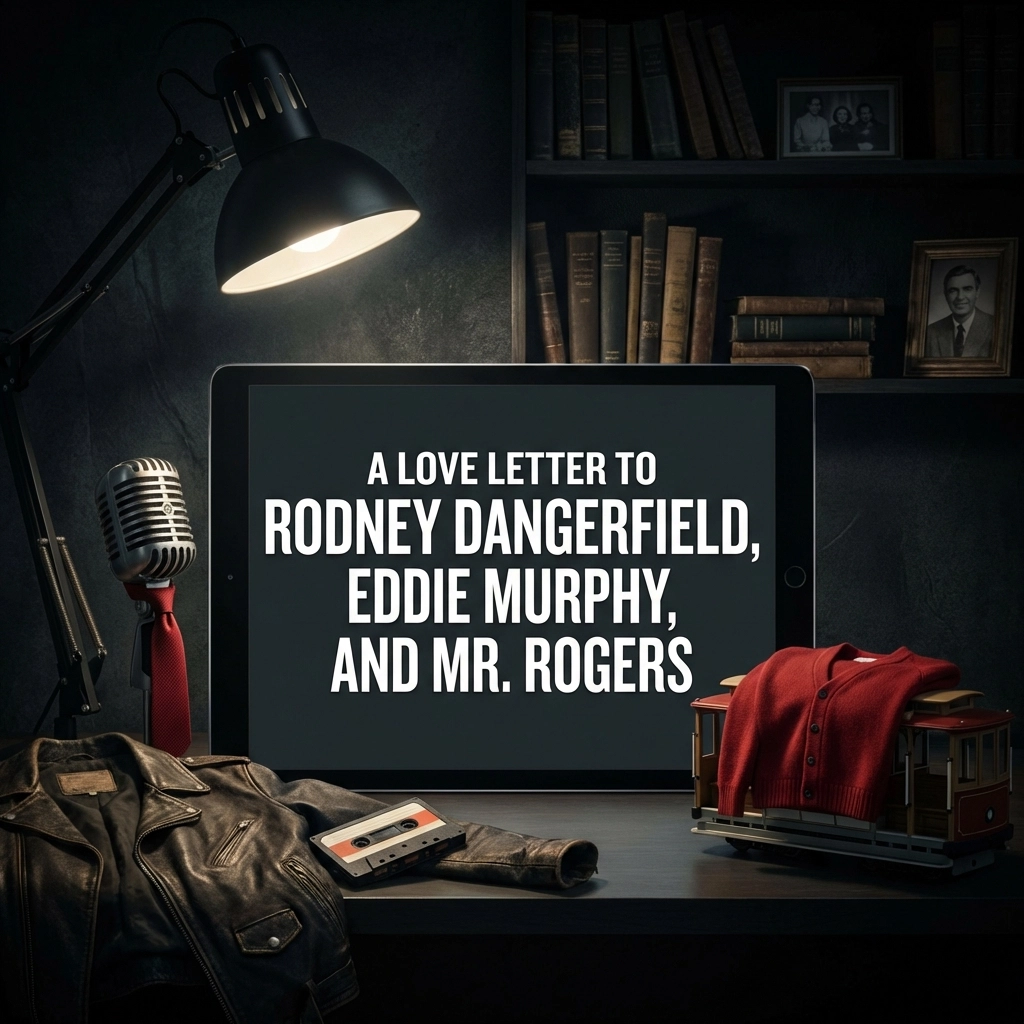
A Love Letter to Rodney Dangerfield, Eddie Murphy, and Mr. Rogers

heroImage

This is a love letter to Rodney Dangerfield, Eddie Murphy, and Mr. Rogers.

Which sounds like the beginning of a joke, a threat, or the world’s most confusing Mount Rushmore , but stay with me.

These three live permanently in my head. They are the voices arguing while I’m trying to create something, a joke, film or writing. One demands precision. One demands electricity. One quietly asks if any of it matters. And somehow, they all have a point and exsist in my head.

If you’ve ever tried to make something , you know there are always voices in your brain. Mine just happen to wear a red tie, a leather pants, and a cardigan.

Let me explain.


Rodney Dangerfield: The Gold Standard

Rodney Dangerfield is, to me, the gold standard. My favorite jokes, sure fire and a ton of charisma.

The perfect joke writer. The perfect personality. I still don’t know what’s better , his stand-up or his films , which is the highest compliment you can give an entertainer. Most people peak in one lane. Rodney paved all of them for me.

image_1

Every word was sharp. Every pause intentional. Wasnt begging for laughs. He was demanding them, then acting surprised when they came.

“I get no respect” was a philosophy. A brand. A way of life that somehow made self-deprecation feel like a superpower.

And those early movies , Caddyshack, Back to School, Easy Money , they’re comedic blueprints. No wasted motion. No wasted joke. Just relentless, precision. He could walk into a scene, say twelve words, and own the entire film. That’s not luck, thats decades of bombing, rebuilding, and refusing to quit. 10,000 hours right? (end up with 2 good ones, now that says something)

When I sit down to write, Rodney is the voice that says: “Is the joke tight? Is every word pulling its weight? Cut the fat. Make it land with a button at the end.”

He’s the editor in my head who won’t let me get lazy. And honestly? He’s kind of exhausting. But he’s right.


Eddie Murphy: Pure Electricity

If Rodney is precision, Eddie Murphy is electricity with a perfect smile.

Eddie doesn’t even have to do anything , I’d watch him sit in a chair and think. But the thing is, he does everything. Beverly Hills Cop. Dolemite Is My Name. Stand-up specials that still hold up forty years later. Characters. Impressions. Act-outs so perfect they feel illegal.

There’s a moment in Delirious where Eddie does an impression of his aunt falling down the stairs, and it’s maybe thirty seconds long. It shouldn’t be that funny. It’s just a man in red leather pretending to tumble. But it’s transcendent. It’s the kind of comedy that makes you angry if you’re also a comedian, because how is he doing that? How is it that easy for him?

(It’s not easy. He just makes it look that way.)

Eddie proved you could be cool, fearless, and brilliant all at the same time. He made comedy look dangerous and fun , like you might get in trouble just for laughing too hard. There’s a swagger to his work that never feels arrogant, Like he’s letting you in on something wild.

When I’m writing and the joke is technically fine but feels dead, Eddie is the voice that says: “Okay, but is it alive? Stop telling us and show us?”

He’s the one pushing me to take risks. To commit fully.


Mr. Rogers: The Quiet Anchor

And then there’s Fred Rogers.

The quietest influence. The strongest one.

This is where it gets weird, I know. What’s a guy in a cardigan doing next to two of the greatest comedians who ever lived? But that’s exactly the point. Mr. Rogers isn’t in my head to be funny. He’s there to ask the harder question.

“Yeah, but does it mean something?”

Everything Mr. Rogers did was built on a pure moral foundation , and he never wavered. Not once. He genuinely cared. About people. About kids. About feelings. About being kind without apology. He didn’t chase laughs or applause. He stood for something and let everything fall underneath it.

That kind of integrity is harder than any joke.

There’s a famous story about Mr. Rogers testifying before the U.S. Senate in 1969 to save funding for public television. He didn’t argue or debate. He just talked , calmly, sincerely , about the emotional lives of children. And he won. Not because he was clever, but because he meant it. Can I be that?

That’s the part of creativity that doesn’t get talked about enough. The why. The foundation underneath. You can write the perfect joke, deliver it with perfect energy, and still have it feel hollow if there’s nothing real beneath it.

Mr. Rogers is the voice that keeps me honest. The one that asks: “does it actually say something? Are you making something you believe in, or just something that works?”


The Chaos That Makes Sense

So when I sit down to write, that’s the noise in my brain.

Rodney demanding the joke be perfect.

Eddie pushing it to be alive.

Mr. Rogers quietly asking if it means something.

These three men have almost nothing in common on the surface. One built a career on self-deprecation and one-liners. One redefined what it meant to be a comedy superstar. One spoke softly to children about their feelings.

But here’s what they share: authenticity.

Rodney was authentically himself , the guy who never got a break, even when he was getting every break. Eddie was authentically himself , the young kid from Long Island who walked into Hollywood like he already owned it. Mr. Rogers was a gentle man who believed in kindness.


When It Works

There are moments , rare ones , when all three voices align.

When the joke is tight (Rodney nods).

When the delivery has energy and life (Eddie grins).

When it actually means something beyond the laugh (Mr. Rogers smiles quietly).

Those moments are what I’m chasing. That intersection of craft, charisma, and conscience. It doesn’t happen often. Most of the time, I’m just arguing with ghosts in my head, trying to make something that doesn’t embarrass me.

But when it works , even for a second , it feels like all three of them  said, “Okay… now you’re onto something.”

And that’s enough to keep going.


The Point (If There Is One)

If you’re a creative person : a comedian, a writer, a musician, a whatever : you probably have your own weird Mount Rushmore. The voices that argue while you work. The influences that don’t make sense together but somehow form your taste.

Mix Tape era

March 3, 2026 by mark124

For anyone my age who has ever made a mixtape. This is an idea I was messing with for my book. It got axed from it, so I played with it to post and hopefully start a conversation with you people of Facebook.

—

The Premise is making a mix tape of the top 3 songs of every year since my birth.

So here’s a fun idea: let’s take a musical journey through every year since 1981—my birth year, because obviously the universe began then—and look at Billboard’s top three songs each year. Simple, right?

Turns out, tracking down Billboard’s official year-end top threes for every single year since Reagan was president is like trying to find a drink in parts of Utah: theoretically possible, but surprisingly elusive. I spent a day doing this (avoiding real work in the process) to write this chunk, which will decidedly not make the book. However, I enjoyed doing it, and writing it took me three days. I can’t let it go to waste. Hopefully, 1 person doesn’t blindly scroll and reads it and comments.

Decade Snapshots

1980s – Synths, Sass, and Shoulder Pads

Scrolling through the lists and realizing I need to hear songs I can’t remember I realized the early ’80s delivered some absolute bangers. Like, Holy crap, the 80’s are back. “Physical” by Olivia Newton-John ruled 1981 like a spandex-clad dictator teaching twerkercise class at LA Fitness, while “Bette Davis Eyes” had everyone wondering what those eyes actually looked like. ( My Dog has Joan Crawford eyebrows, does that count?), It sounded like it beamed in from an alternate universe where people didn’t clear their throats before singing and everyone wore more leather and had better cheekbones.

I’m not going to be that guy who claims music was better “back in my day.” Every generation thinks their soundtrack was superior—until they catch themselves belting “Call Me Maybe” alone in traffic, I mean, not me… I never, okay, guilty, but come on, it’s catchy.

Still, it’s fascinating to trace the yearly anthems. “Hard to Say I’m Sorry” (1982) turned Chicago—the once-jazz-rock rebels with a killer horn section (Big fan of horns in rock)—into the kings of soft-rock apologies doing bad teen movie love mongage butt rubbers. Then came 1983, when The Police topped the charts with “Every Breath You Take”, the all-star stalker anthem disguised as a love song.

The ’80s were pure neon insanity. MTV was new, cocaine was “just a pick-me-up,” and fashion looked like everyone lost a fight with a lawn mower.

Madonna turned “sex sales” into an outfit, Prince made weird sexy, and Michael Jackson moonwalked straight into pop immortality with a sex scandal. “When Doves Cry” was an existential crisis you could dance to, and “Every Rose Has Its Thorn” taught us that even guys in eyeliner have feelings for Pam Anderson.

We were living in the age of excess, where every song had three key changes, and even the power ballads proved that even badass rockers could sing and wear spandex and silk.

1990s – Flannel, Feelings, and the Macarena Economy

The ’90s hit like puberty for pop culture in a coffee house in an oversized sweater. One minute we were slow-dancing to “End of the Road” by Boyz II Men, and the next we were screaming “Smells Like Teen Spirit” in a basement with questionable ventilation.

We had power singers: Whitney owned the early years, Mariah hit every note that physically exists, even ones that shouldn’t, and TLC warned us about chasing waterfalls while inspiring every Halloween costume from 1995 to 2003 for girls who didn’t want to dress up but had a Rite Aid membership card.

Then came “Macarena,” a song or virus, so catchy it convinced millions of adults to publicly perform synchronized pelvic thrusts at weddings, no matter your age, weight, or rhythmic ability, and everyone would mumble gibberish while riding an invisible swing, raise their hands to the ceiling, and shout HEEEEY MACAREEANA! HEY HEY!

2000s – The iPod Generation and the Rise of Auto-Tune

The 2000s were chaotic for artists. Napster blew up the record industry, and suddenly everyone was a music critic with a dial-up and a chin beard. The idea of growing as an artist seemed to be looked down on. It all became 1 or two hits, not albums anymore.

“Hey Ya!” was art disguised as a dance-floor must, “Crazy in Love” made Beyoncé a deity, and “Umbrella” made Rihanna royalty. Meanwhile, Nickelback, Creed, and Linkin Park dominated radio like a fungus nobody asked for, and “Hollaback Girl” taught me how to spell “bananas”.

It was a decade powered by ringtones, excessive product in your hair, super angular facial hair, and emotional whiplash.

2010s – Algorithms, Anthems, and Emotional Terrorism

By the 2010s, music had fully merged with the internet. So I totally suffered from LAG in culture, due to my lag in wifi, losing most modern popular stuff to my excessive travel as a comedian. I didn’t discover songs—they discovered me—usually at 3 a.m. when Spotify decided you “might relate to” Adele’s divorce. I would listen to music when I got home from the road, so my algorithm must have thought I was depressed to listen at these god awful hours. I was always about two decades behind music trends during these years, forcing myself to put the vinyl down and listen to today’s hits.

“Uptown Funk” convinced me I could still (try to) dance, and Ed Sheeran’s “Shape of You” became so omnipresent it started playing inside my dentist’s thoughts.

Pop stars weren’t people anymore; they were corporations with emotions and publicists. Every chorus was engineered in a lab to sound good while microwaving leftovers. The spontaneity of music discovery was disappearing. We became part of the formula they were selling.

2020s – The Era of Everything, Everywhere, All at Once

Now we live in musical chaos theory. Genres don’t exist—just vibes and anxiety. Social media breaks younger artists, and only people over 50 seem to tour. Billie Eilish whispers her trauma, Taylor Swift controls the global economy with friendship bracelets, and half of TikTok thinks Fleetwood Mac is a new band.

Songs no longer “drop”; they arrive in your algorithm uninvited and are downloaded straight to your brain’s reward system (VTA).

We’re in an age where nostalgia remixes nostalgia ( what, will they reboot Happy Days next? The show about nostalgia), and your playlist can go from Sinatra to Slayer without warning. If the ’80s were hairspray and keytars, the 2020s are FaceTime and ring lights.

When I was eight, I didn’t know adults debated what was “the best” song of a given year. Music just was. You heard it on the radio, taped it off MTV between Clearasil ads, and called it a day.

Looking back, each year’s hits feel like postcards from completely different planets. It’s fun to watch as I get older; the hitmakers keep getting younger.

—

The Spotify Problem

Back then, Billboard measured actual sales and radio spins—tangible proof of what people were buying or begging DJs to play. Now they must check other sources, plays on social, followers, downloads and physical sales?

Now, this isn’t the case: no more waiting for Casey Kasem to count backward from 40, which was a nightmare for me, a dyslexic who needed to catalog the results because I couldn’t remember anything unless I had a list or chart in front of me to see the big picture.

The downside: the shared cultural soundtrack is gone. When’s the last time you could bet everyone at a party knew the same song that wasn’t 20 years old? Now it’s like being with a bunch of hipsters all the time. “Oh, let me show you this band you have never heard of. They have a sound that formed in the southern basement of a Buddhist church on the east side of Chattanooga that was inspired by a blah blah blah… It’s like the joke: how many hipsters does it take to screw in a light bulb? Oh, some number you’ve never heard of.

Revisiting Billboard’s hits is like flipping through your old photo albums—you’re not really researching history, you’re excavating memories, some of which you have completely forgotten about. Every song makes you pull up the music video on YouTube, then you start down a rabbit hole that takes up your entire afternoon, getting nothing done but remembering people, places, and crap that stirs up things like the smell of your grandparents’ car.

Songs become timestamps: “That was our wedding song.” “That played the week we won the league.” “That was my Caesar haircut phase.” Some tracks age like fine wine, while others are like milk in a glove compartment of a muscle car driving across the southwest during summer, but all of them hold memories.

Maybe the real treasure isn’t the list itself. Maybe it’s remembering that music has always been this glorious rigmarole where art and money collide, and someone’s Tuesday afternoon in a studio becomes someone else’s first kiss. So many people are affected by the spark that turns into a song. To radio play, to a hit, to a DJ at a dance, to someone falling in love over the song and holding on to it for a lifetime. And the writer never knows half the stories that got made in real life over their work. I mean, Dianna Ross and Lionel Richie should have paid child support for tons of children that were created over bad choices during great songs.

Every year since I’ve been alive, somebody wrote a song that made someone fall in love, break up, cry, or dance like an idiot at a school function. Billboard just tallied the aftermath.

The real chart lives in your car stereo, headphones, phone, and that one song that still hits like it was written just for you. Your personal “walk on” music. Mine is probably Doc Watson’s Windy and Warm (Not what you thought I would say?)

So while I didn’t give you the

Directors

February 26, 2026 by mark124

As a comedian, actor, and occasional director, I spend an unhealthy amount of time thinking about what makes people laugh, what makes them feel, and what makes them think about life.

Over the years, I’ve realized I keep circling the same handful of filmmakers — people who understand something very basic about being human, even if they express it in wildly different ways. They don’t lecture. They observe.

So this is my personal Mount Rushmore of filmmakers: Peter and Bobby Farrelly, Richard Linklater, Mike Judge, and Paul Thomas Anderson.

On paper, it makes no sense. One duo made a career out of dick and Shit jokes (said with love and gratitude), one guy films people having long conversations, another dissects corporate America like a prophet, and the last makes epic character studies that feel intimate. But underneath the tones and genres, they’re all doing the same thing: trusting the audience and respecting the human existence.

Let’s start with the Farrelly Brothers, because honestly, they might be the reason I became a comedian.

When Dumb and Dumber came out in 1994, I was the perfect age to think gross-out humor was not just funny, but revolutionary. Here were two guys making a movie about the dumbest people imaginable — and somehow making you root for them. That felt new. That felt allowed, and still, it felt rebellious.

Then There’s Something About Mary came along when I was in high school, and I remember thinking, Wait… you can do this? This is the stuff I laughed at with my brother. This is how we talked. I had never seen that tone — that exact mix of absurdity, heart, and shamelessness — on screen before. It made me think, I must be a filmmaker, This could be fun. Which, in hindsight, is dangerous. It changed the way I conducted myself. I realized the stuff that my brother and I thought was funny other people laughed at too.

The Farrelly style is deceptively simple: take characters who should be completely unlikable — idiots, perverts, deeply flawed humans — and find the humanity in them. Lloyd and Harry aren’t just dumb; they’re relentlessly optimistic. Ted isn’t a stalker; he’s genuinely in love and wildly unequipped to handle it.

What separates the Farrellys from other gross-out comedy is the heart. Beneath the hair-gel jokes and toilet humor lies real empathy. Me, Myself & Irene could’ve just been Jim Carrey doing faces, but instead it turned into a surprisingly tender story about identity and self-acceptance — wrapped in a road trip.

Years later, getting to meet Peter Farrelly and watch him work was a quiet validation. Seeing the way he directed — loose, confident, human — confirmed everything I’d always felt about the process. Twenty-seven years after Something About Mary, watching him in action made me realize the thing I loved back then wasn’t just the jokes. It was the permission. The idea that you could be ridiculous and sincere at the same time. He opened my eyes and validated my brother’s and my sense of humor. Maybe that is what makes them so funny, it’s the brother thing.

That lesson stuck with me. In comedy, and in life, sometimes the fastest way to the truth is through a laugh.

If the Farrellys taught me that comedy needs heart, Richard Linklater taught me that drama doesn’t need a plot twist — it just needs real people.

I’ve watched Dazed and Confused more times than I can comfortably admit. Different ages, different apartments, different cities, different versions of my life — same movie. And somehow I never get tired of it. That alone feels like a magic trick. Most films start to show their seams after a while. Linklater’s just keep breathing and growing.

The thing about his work is this: every so often, I’ll be completely locked into a movie, totally forget about my own life, and feel like I’m just hanging out inside someone else’s for two hours. Then the credits roll, I look up the director, and think, Of course. It’s Linklater. That’s not an accident — that’s a skill.

One of my favorite things I own is my Dazed and Confused DVD, signed by Linklater himself. My neighbor, Dan “Diego” Fulton, got it for me when he worked on a movie with him. He knew how much I loved that film, so he casually broke into my apartment (he lived downstairs from me), took the DVD, got it signed, and returned it like this was a normal, neighborly thing to do. No note. No apology. Just a surprise. Dan Fulton was a saint, and I miss him dearly.

Linklater built a career filming conversations — which sounds boring until you realize he’s filming real life. His movies understand that the biggest moments usually happen between the big moments. Dazed and Confused isn’t about the last day of school; it’s about what it feels like to be that age, drifting through a night where everything feels possible and nothing is decided yet.

That obsession with time runs through all his work. The wandering philosophy of Slacker. The real-time intimacy of the Before trilogy. The realization of filming Boyhood over twelve actual years. He’s less interested in what happens than in how it feels while it’s happening. Feelings, and Location are the main characters, Time is the Antagonist, and the people are the observers of the scene (it makes sense in my head, I swear).

What I love most is how much he trusts the audience. He doesn’t underline emotions or hand you a guide. He lets conversations trail off. He lets silence do some of the work. In lesser hands, it could feel pretentious. In his, it feels honest. And suddenly, a walk and a conversation feel as important as any car chase.

As someone who makes a living talking to strangers for a living — sometimes sober, sometimes not — Linklater’s movies are a reminder that everyone has a story worth hearing. You just have to slow down long enough to listen.

Which, coincidentally, is also good advice for comedy… and for life.

Mike Judge: The Suburban Prophet

Anytime I try to build a project or write characters, Mike Judge is always in the back of my mind — like a quiet warning label that says, “Don’t overwrite this. Life already did the work., If they don’t get it just move on.”

Mike Judge is the most underrated satirist of our time, and I’ll fight anyone who says otherwise (not physically — It just sounds better than saying, I’ll debate you). While other filmmakers were making big, flashy social commentaries, Judge was calmly documenting the slow, polite collapse of the American dream from inside an office park.

Office Space should be mandatory viewing for anyone who’s ever had a soul-crushing job, which is to say: everyone. Judge’s genius is that he never turns his characters into cartoons. Peter Gibbons isn’t lazy — he’s awake. He’s realized the system he’s trapped in is deeply stupid, and he’s the crazy one for noticing it.

Then there’s Idiocracy, which started as lowbrow comedy and somehow aged into a public service announcement. Judge saw the cultural dumbing-down coming from a mile away and decided the best way to warn us was with a movie where Starbucks serves handjobs and the biggest blockbuster is called Ass. Subtlety is overrated.

And then there’s King of the Hill, which for my money might be the most perfect comedy ever made. It’s a whole neighborhood of people who all think they’re normal — and somehow, they all are. Hank Hill is decency and competence wrapped in khakis and Texas pride. Peggy is ambition with blind spots. Bobby is gentle, strange, and hopeful in a way that scares parents and saves them at the same time. Dale sees conspiracies everywhere. Bill carries the quiet sadness of unmet potential. Boomhauer speaks in vibes. Luanne survives with optimism and makeup. Khan and Minh bring that beautiful pressure of immigrant excellence and Keeping up with the Joneses.

The brilliance is that Judge never punches down or winks at the audience. Everyone is right about something and wrong about something else. You don’t feel judged — you feel seen. That’s why a single episode can make a kid laugh, a parent nod, and a comedy nerd sit there admiring the craftsmanship.

Judge’s style is deadpan observation. He doesn’t exaggerate because reality is already ridiculous enough. His characters speak in corporate buzzwords, half-thoughts, and cultural noise — the way people actually talk when they’re trying to survive in the real world.

What I admire most is his patience. He lets awkwardness breathe. He lets silence do work. In a world of rapid-fire jokes, he reminds us that sometimes the funniest thing is just watching someone struggle with a printer for five uninterrupted minutes.

I often feel like a Mike Judge character. I’ll be standing somewhere — a store, an airport, a meeting — noticing how absurd everything is, wondering, Do other people not see this? Then I look around and realize… they’re completely fine with it. That’s when I start laughing, quietly, to myself.

And someone inevitably asks, “What’s so funny?”

And I say, “Nothing.”

Because explaining it would ruin the joke, and I can always text my wife or brother because they also know what its like to see the world in Marks “Lenses”.

Paul Thomas Anderson: The One That Did It

Paul Thomas Anderson is the odd man out on this list — and in a lot of ways, he’s the reason the list exists at all. He’s not a comedy director, and his films lean epic and operatic rather than conversational. But he’s also the reason I got into entertainment in the first place.

I’ll never forget the first time I saw Boogie Nights. It was a dollar theater in Youngstown, Ohio — the kind of place where the carpet has absorbed decades of spilled soda well, you hope its soda. I was on a double date with one of my closest friends. The theater was drab, run down, barely hanging on. Perfect conditions for a life-altering experience, apparently.

As the movie rolled on — the music, the movement, the underbelly of society unfolding on screen — I started to lose track of where I was (I wasn’t on drugs). And the weird thing is, when I looked around the theater, it kind of matched the movie. It felt like the screen had leaked into the room. At some point, I completely forgot who I was, what year it was, and why I was there. I didn’t snap out of it until we were walking into the parking lot and I saw my Jeep. That’s when it hit me: Oh right. It’s not the ’80s. I’m not in this world. The movie’s over.

I remember driving home thinking, Oh my God — I want to do this for a living. Not the fame part. Not porno part. Not the red carpet part. The transportation part. I wanted to make something that could grab someone by the collar and pull them into another life for two and a half hours. No drugs. No tricks. Just story, sound, movement, and characters so alive you forget yourself.

That’s what PTA does better than almost anyone: he understands character psychology on a molecular level. His films are maximalist — long takes, elaborate camera moves, giant ensembles — but they never feel cold. Boogie Nights takes you into the porn industry and somehow makes you care deeply about every broken, hopeful, delusional soul in it.

Magnolia is three hours and eight minutes of confusion, coincidence, relationships from odd points of view, and emotional confession that shouldn’t work — and somehow does. You don’t watch it so much as you get carried to the end.

And Punch-Drunk Love might be my favorite trick of his. He took Adam Sandler — the poster boy of loud comedy (big fan of his) — and revealed the human anxiety underneath. Suddenly, the rage wasn’t a joke. It was loneliness. It was fear. It was a guy who didn’t know how to love without breaking something.

Also, a very important thing about PTA is his love of ensemble casts with reoccurring actors. He in my opinion brought Phillip Seymour Hoffman to the stardom he deserved, and allowed the industry to see him as a unlikely star.

PTA’s films remind me that even in a loud, fractured, overconnected world, we’re all basically just trying to figure out how to love and be loved — and failing in very personal, very human ways. His characters are messy, sincere, awkward, and emotionally ill-equipped.

Which, honestly, is probably why I believed his work.

And why I walked out of a busted dollar theater in Ohio knowing — for the first time — exactly what I wanted to do with my life.

What They All Share (And Why They Matter to Me)

So what do these four very different directors have in common? Why does a comedian from New York via Ohio find himself equally drawn to hair-gel jokes, people talking for three hours, suburban despair, and operatic emotional breakdowns?

First, they all understand something fundamental: style should serve story, not the other way around.
The Farrellys’ gross-out gags aren’t random — they reveal character. Linklater’s long conversations aren’t indulgent — that’s how people actually connect. Judge’s deadpan observation isn’t detached — it’s how you survive absurdity. Anderson’s elaborate filmmaking isn’t showing off — it’s in service of emotional truth.

Second, they all have deep empathy for their characters, especially the flawed ones. Whether it’s Lloyd Christmas, Hank Hill, Jesse and Céline, or Daniel Plainview, these filmmakers find humanity in people who could easily be dismissed, mocked, or written off entirely. They don’t look down on their characters — they stand next to them.

Third, they’re obsessed with authenticity. How people really talk. How they really behave. How they really love, fail, avoid, and occasionally surprise themselves. Even when the situations are outrageous, the emotional truth feels earned.

But mostly, they’ve shaped how I think about comedy and storytelling.
From the Farrellys, I learned you can be ridiculous and sincere at the same time.
From Linklater, I learned that ordinary conversations can be extraordinary.
From Judge, I learned that the best social commentary comes from quietly paying attention.
From Anderson, I learned that every character deserves respect — even the deeply broken ones.

Taken together, these guys remind me why I fell in love with movies and comedy in the first place. They’re all doing the same thing in different ways: finding truth in unexpected places and handing it to an audience who might not have noticed it otherwise.

Deer Season

February 24, 2026 by mark124

Cruising down the turnpike at 65, when a deer jumped the guardrail and hit the side of my car. Not the front — the side. Like it saw me coming and thought, “Yeah, I’m taking this guy with me.” I mean, most animals avoid cars. This one? It chose violence that morning.

And here’s the part that sticks with you — one second in either direction, and I’m posting this from a hospital bed or the morgue. One second. That’s it. Life’s funny like that: you’re humming along, mind on taking the boys to a Halloween party, and why my Steve Poltz Pandora channel plays everything except Steve Poltz, I mean seriously They Played Willie Nelson three times before 1 steve poltz song, I love willie nelson but I have my “Field Hippy Channel” with Willie, Townes and Steve Earl, i am in the mood for Steve Poltz, then bam, you’re suddenly aware of your own fragile human meat suit.

The impact felt like I hit a cement pole or a fire hydrant, not that I hit either of those things… I’m sitting there, heart pounding, thinking, “Well, that’s it, I’ve been taken out by a suicidal woodland missile.” Thank God I’m fine. I pull over, bracing for Bambi revenge… and the Sonofa bitch gets up, shakes it off, and jogs back into the woods like a heavyweight boxer going back to his corner who just got caught with a cheap shot. Even gave me that look, like, “You bastard, I had shit to do today.”

Meanwhile, my car is sitting there totaled, covered in deer hair, and — I kid you not — deer bladder contents. yep, front and back, the side of my car looking like a truck stop bathroom after texas chilli night. This thing didn’t just hit me; it was a hit-and-run, and he peed on the crime scene ashes. Full drive-by energy. If deer had lawyers, mine would be filing papers right now.

So be safe out there. The deer aren’t just crossing the road anymore — they’re coming for us. Hit and run, with no insurance, no apology.

Self Help? Acting

February 19, 2026 by mark124

There is no better acting exercise than being at a gas station and watching someone walk in with full intent straight to the men’s room. It’s completely clear they know what they want and what they need. They are doing it with purpose and high stakes. Bravo Daniel Day-Lewis of The flying j!

Self Help?

February 17, 2026 by mark124

The Grocery Store Olympics: Cart vs. Aisle vs. Sanity

There is panic at the grocery store every trip. I was at GIANT in the town over from us, just trying to grab milk — you know, the errand equivalent of “I’ll be right back” in a horror movie — and suddenly I’m in the Grocery Store Olympics. Thankfully, after years training by living in New York, I navigate crowds like a salmon with a MetroCard. I zip, sidestep, merge. I can dodge a rogue shopping cart like it’s 40th Street at rush hour and the person pushing it thinks spatial awareness is a myth from the old country.

And flanking me are my two boys: Duke — my loving ADHD squirrel/Spider Monkey in human form — bouncing between aisles like he’s been sipping cappuccino, asking “Can we get this? And this? And Dad, look! They make ice cream-filled pretzels!” before sprinting off to scale a pyramid of canned yams like it’s the Temple of Doom. Then there’s Axel, the curious philosopher-chef, analyzing ingredient labels and asking deep questions like “Dad… why is homemade food better than processed? What is a flavonoid? And do hot dogs count as meat if none of it looks like actual animal parts?” Meanwhile, I’m just trying to remember if we need eggs or if I’m hallucinating dairy at this point. They have every kind of nut and plant milk, but no milk milk.

Around us, shoppers are split into two types: the produce-section NASCAR drivers and the aisle blockers, stationed like they’re guarding the last loaf of 14-grain bread. Everyone’s running their own silent event: speed bagging, stealth sampling grapes, and the classic “pretending not to panic when you can’t find the pears,” followed quickly by “pretending you weren’t staring into the frozen pizzas like you just remembered every bad decision you’ve ever made.”

And somewhere in the chaos it hits me: we’re all in this together. All of us, parents and grandparents, pushing carts full of hopes, family balance, and bad life choices (Aisle 5). So if you ever see someone behind you with just three items — especially a frazzled parent flanked by a squirrel and a tiny food scientist — let them go first. You’ll earn good karma… and prevent the bread aisle from becoming a hostage situation.

Previous »

Join The Community!

Need a laugh? I will send you schedules for tours, fun clips, and other news (but not to worry, I'm lazy, so only a couple of times a year!) Join the mailing list here!

Follow Me


2018 © Copyright @ MARK RICCADONNA –  All Rights Reserved