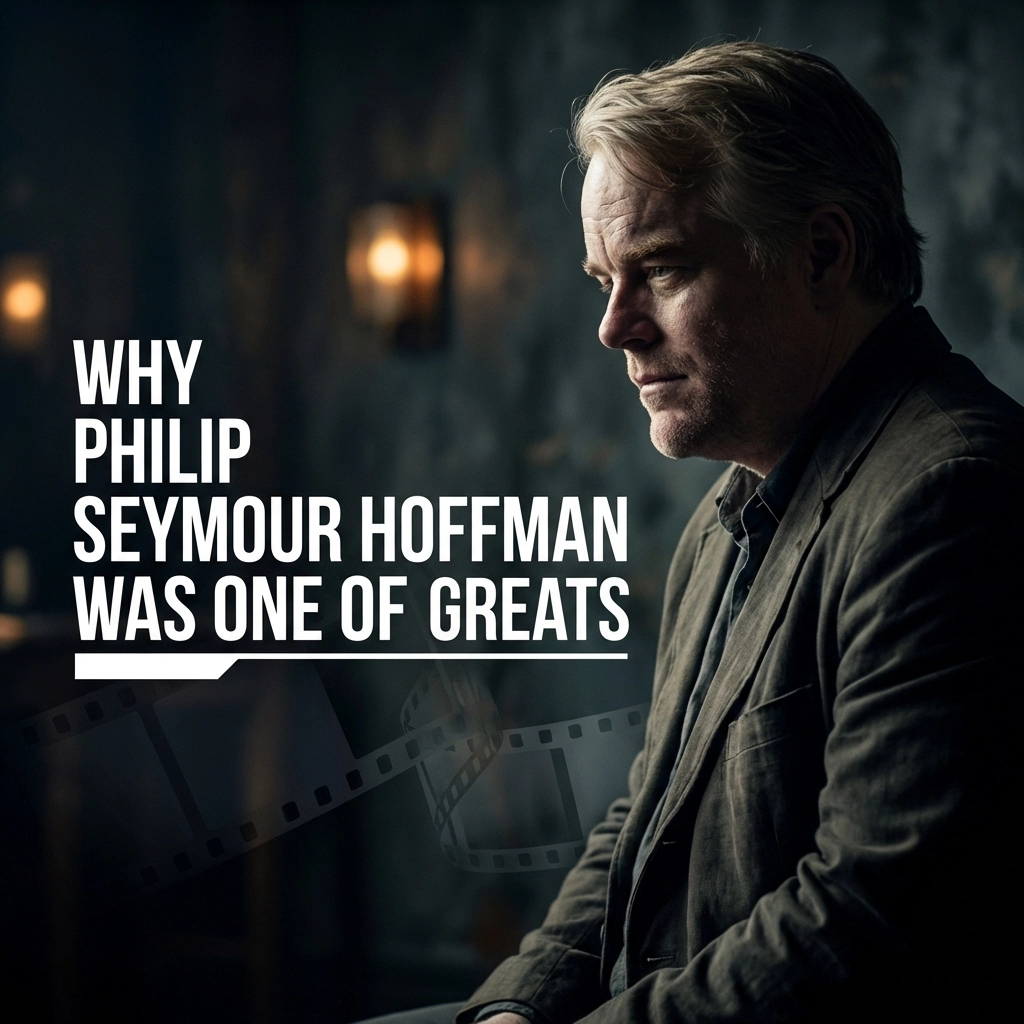
Why Philip Seymour Hoffman Was One of the Greats
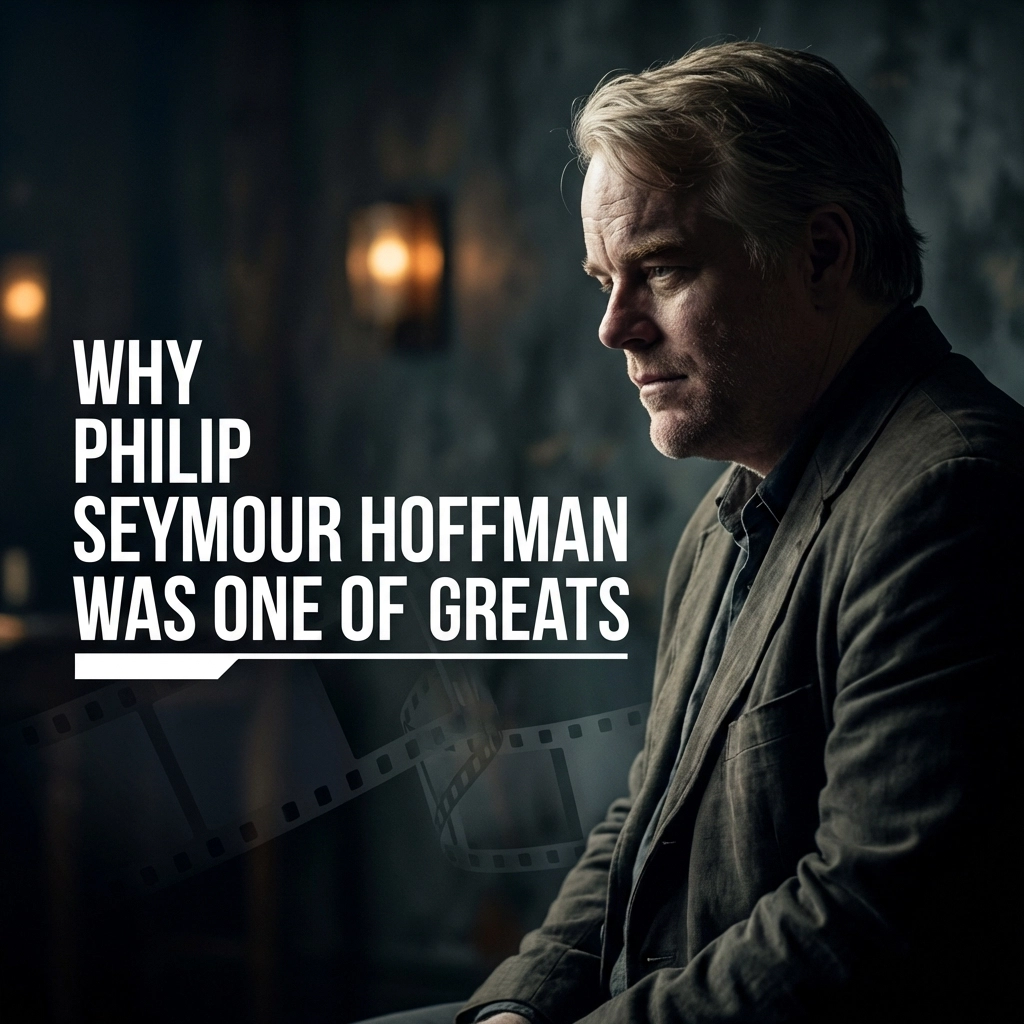
When you hear “leading man,” Philip Seymour Hoffman probably isn’t the first face that pops into your head. No chiseled jaw, no heroic slow-motion walk. And that’s exactly why he became one of the greatest actors to ever do it.
While other actors were busy perfecting their angles, Hoffman was busy becoming people. Not characters — people. He had this ability to disappear so completely that you’d forget you were watching an actor at all.
His range was borderline unfair. One minute he’s the deeply uncomfortable phone-sex operator in Happiness, and the next he’s Truman Capote, floating through rooms with eerie precision. He never showed off. He just showed up, fully formed, every time.
When I first moved to New York, I was lucky enough to study with an incredible acting teacher named Scott Hudson. Scott wasn’t just a great teacher — he was also the guy who introduced me to Philip Seymour Hoffman. This was before the legend calcified. He had just come off Boogie Nights. Magnolia was shot but not out yet. He was still doing small parts and theater, including True West at Circle in the Square with John C. Reilly.
Scott invited me to that production. It was one of the first times I’d ever been in a room where everyone was someone. I sat in the corner like a confused houseplant and just listened. Sam Shepard held court, talking shop like it was a backyard barbecue. I was completely floored that this world existed.
Scott kept inviting me along — plays Philip directed, plays he acted in — and then, slowly, we stopped seeing him around. Not because he vanished, but because his career exploded. Suddenly he was just in the movies. Everywhere. Always great.
What really separated Hoffman was that he never played answers — he played people. Take Doubt. A lesser actor turns that priest into either a saint or a villain. Hoffman makes him human, complicated, conflicted. You leave the movie still arguing with yourself about what actually happened. He trusted the audience to sit in discomfort, and that takes real confidence.
Hoffman wasn’t larger than life. In a business obsessed with impossible beauty, he showed up looking like a guy who’s late on rent. And because of that, everything landed. When he loved, failed, spiraled, or tried to explain himself out of a corner, you believed him. Not movie-believed. Real-believed.
Almost Famous is a perfect example. As Lester Bangs, he’s dispensing wisdom, but when he talks about loneliness and not mistaking access for friendship, you lean in. Because this guy lived it.
And then there’s A Most Wanted Man, one of his most underrated performances. He’s chain-smoking, quietly terrifying — a bureaucratic tough guy whose weapon isn’t fists, it’s patience. The cigarettes aren’t a quirk; they’re a tell. Also: he somehow had a better German accent than half the actual Germans in the film, which is unfair but very on brand.
One thing you had to admire about Hoffman: the guy was absolutely fearless when it came to choosing roles. While other actors were calculating their careers like chess grandmasters, Hoffman was picking projects other people wouldn’t touch. Happiness? Dark as midnight and twice as disturbing. Punch-Drunk Love? The Master? He didn’t just take these roles — he attacked them.
Here’s a part of Hoffman that doesn’t get talked about enough: the guy was a theater animal. Not a movie star who popped onto a stage for credibility, but a real, working stage actor who loved the grind. Three Tony nominations. Directed 19 productions. Nineteen. That’s not dabbling.
Death of a Salesman is the big one. His Willy Loman wasn’t some grand tragic figure — he was heartbreakingly familiar. The kind of performance that makes you uncomfortable because it feels like you’re watching your own dad unravel in real time. And it wasn’t just that role. He tore into True West, Long Day’s Journey Into Night, Othello, The Seagull — heavy lifts, no shortcuts. Every time, he disappeared the same way he did on film.
Watching that part of his career always lit a fire under me. Hoffman made it clear there was no finish line, just deeper levels. He didn’t chase “leading man” status; he chased truth. And seeing how hard he worked made me want to work harder too. Not to be famous. Just to be better.
So why was Philip Seymour Hoffman one of the greats? Because he understood something a lot of actors never do: the job isn’t to be hot, cool, or Instagram-able. The job is to be true to the role. He just showed up, dug around in the mess, and found the human being inside it. In an industry obsessed with image, Hoffman was obsessed with honesty. And audiences don’t actually need perfect — they need real. Perfect is boring.
Most actors were busy performing. Hoffman was just being.