• HOME
  • TOUR
  • BIO
  • Director Bio
  • TV/FILM
  • Media
  • GALLERY
  • CONTACT
  • Beacon of Insignificance

Monthly Archives: February 2026

Directors

February 26, 2026 by mark124

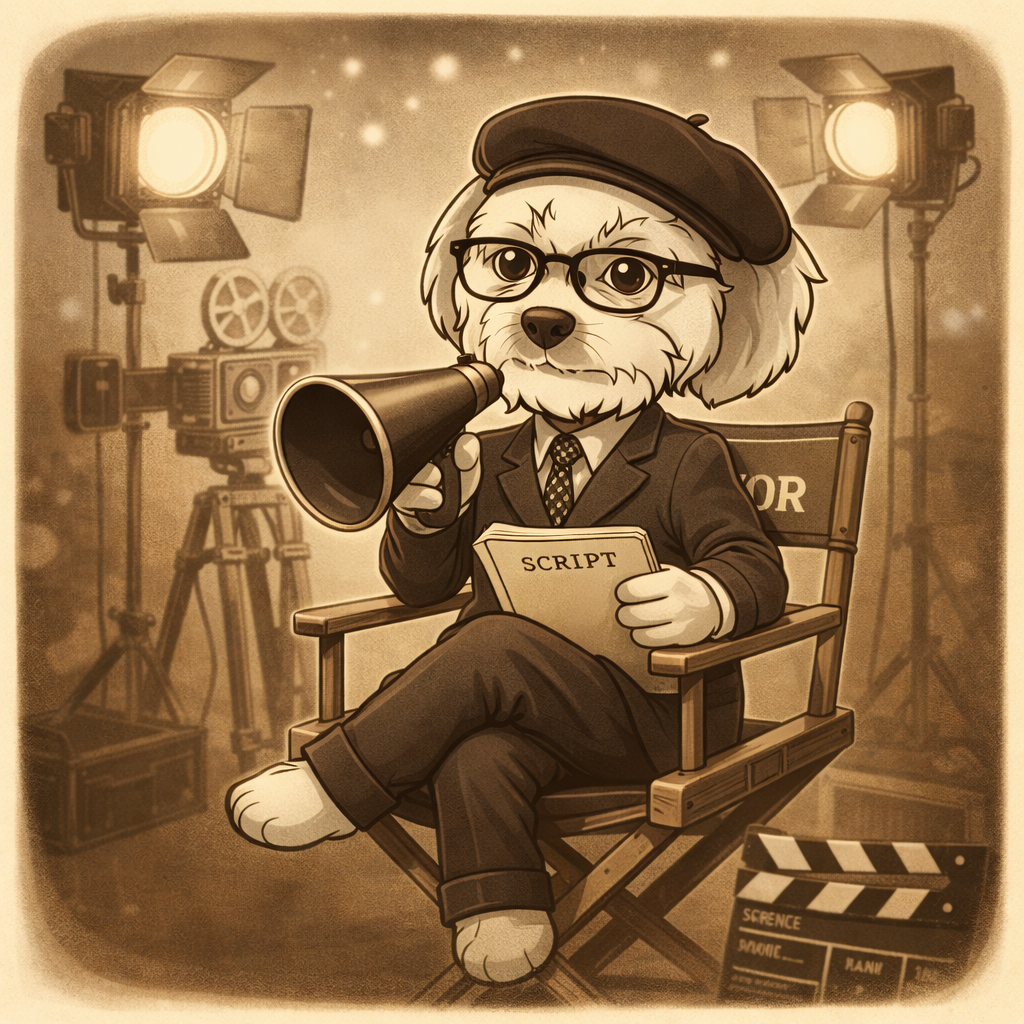
As a comedian, actor, and occasional director, I spend an unhealthy amount of time thinking about what makes people laugh, what makes them feel, and what makes them think about life.

Over the years, I’ve realized I keep circling the same handful of filmmakers — people who understand something very basic about being human, even if they express it in wildly different ways. They don’t lecture. They observe.

So this is my personal Mount Rushmore of filmmakers: Peter and Bobby Farrelly, Richard Linklater, Mike Judge, and Paul Thomas Anderson.

On paper, it makes no sense. One duo made a career out of dick and Shit jokes (said with love and gratitude), one guy films people having long conversations, another dissects corporate America like a prophet, and the last makes epic character studies that feel intimate. But underneath the tones and genres, they’re all doing the same thing: trusting the audience and respecting the human existence.

Let’s start with the Farrelly Brothers, because honestly, they might be the reason I became a comedian.

When Dumb and Dumber came out in 1994, I was the perfect age to think gross-out humor was not just funny, but revolutionary. Here were two guys making a movie about the dumbest people imaginable — and somehow making you root for them. That felt new. That felt allowed, and still, it felt rebellious.

Then There’s Something About Mary came along when I was in high school, and I remember thinking, Wait… you can do this? This is the stuff I laughed at with my brother. This is how we talked. I had never seen that tone — that exact mix of absurdity, heart, and shamelessness — on screen before. It made me think, I must be a filmmaker, This could be fun. Which, in hindsight, is dangerous. It changed the way I conducted myself. I realized the stuff that my brother and I thought was funny other people laughed at too.

The Farrelly style is deceptively simple: take characters who should be completely unlikable — idiots, perverts, deeply flawed humans — and find the humanity in them. Lloyd and Harry aren’t just dumb; they’re relentlessly optimistic. Ted isn’t a stalker; he’s genuinely in love and wildly unequipped to handle it.

What separates the Farrellys from other gross-out comedy is the heart. Beneath the hair-gel jokes and toilet humor lies real empathy. Me, Myself & Irene could’ve just been Jim Carrey doing faces, but instead it turned into a surprisingly tender story about identity and self-acceptance — wrapped in a road trip.

Years later, getting to meet Peter Farrelly and watch him work was a quiet validation. Seeing the way he directed — loose, confident, human — confirmed everything I’d always felt about the process. Twenty-seven years after Something About Mary, watching him in action made me realize the thing I loved back then wasn’t just the jokes. It was the permission. The idea that you could be ridiculous and sincere at the same time. He opened my eyes and validated my brother’s and my sense of humor. Maybe that is what makes them so funny, it’s the brother thing.

That lesson stuck with me. In comedy, and in life, sometimes the fastest way to the truth is through a laugh.

If the Farrellys taught me that comedy needs heart, Richard Linklater taught me that drama doesn’t need a plot twist — it just needs real people.

I’ve watched Dazed and Confused more times than I can comfortably admit. Different ages, different apartments, different cities, different versions of my life — same movie. And somehow I never get tired of it. That alone feels like a magic trick. Most films start to show their seams after a while. Linklater’s just keep breathing and growing.

The thing about his work is this: every so often, I’ll be completely locked into a movie, totally forget about my own life, and feel like I’m just hanging out inside someone else’s for two hours. Then the credits roll, I look up the director, and think, Of course. It’s Linklater. That’s not an accident — that’s a skill.

One of my favorite things I own is my Dazed and Confused DVD, signed by Linklater himself. My neighbor, Dan “Diego” Fulton, got it for me when he worked on a movie with him. He knew how much I loved that film, so he casually broke into my apartment (he lived downstairs from me), took the DVD, got it signed, and returned it like this was a normal, neighborly thing to do. No note. No apology. Just a surprise. Dan Fulton was a saint, and I miss him dearly.

Linklater built a career filming conversations — which sounds boring until you realize he’s filming real life. His movies understand that the biggest moments usually happen between the big moments. Dazed and Confused isn’t about the last day of school; it’s about what it feels like to be that age, drifting through a night where everything feels possible and nothing is decided yet.

That obsession with time runs through all his work. The wandering philosophy of Slacker. The real-time intimacy of the Before trilogy. The realization of filming Boyhood over twelve actual years. He’s less interested in what happens than in how it feels while it’s happening. Feelings, and Location are the main characters, Time is the Antagonist, and the people are the observers of the scene (it makes sense in my head, I swear).

What I love most is how much he trusts the audience. He doesn’t underline emotions or hand you a guide. He lets conversations trail off. He lets silence do some of the work. In lesser hands, it could feel pretentious. In his, it feels honest. And suddenly, a walk and a conversation feel as important as any car chase.

As someone who makes a living talking to strangers for a living — sometimes sober, sometimes not — Linklater’s movies are a reminder that everyone has a story worth hearing. You just have to slow down long enough to listen.

Which, coincidentally, is also good advice for comedy… and for life.

Mike Judge: The Suburban Prophet

Anytime I try to build a project or write characters, Mike Judge is always in the back of my mind — like a quiet warning label that says, “Don’t overwrite this. Life already did the work., If they don’t get it just move on.”

Mike Judge is the most underrated satirist of our time, and I’ll fight anyone who says otherwise (not physically — It just sounds better than saying, I’ll debate you). While other filmmakers were making big, flashy social commentaries, Judge was calmly documenting the slow, polite collapse of the American dream from inside an office park.

Office Space should be mandatory viewing for anyone who’s ever had a soul-crushing job, which is to say: everyone. Judge’s genius is that he never turns his characters into cartoons. Peter Gibbons isn’t lazy — he’s awake. He’s realized the system he’s trapped in is deeply stupid, and he’s the crazy one for noticing it.

Then there’s Idiocracy, which started as lowbrow comedy and somehow aged into a public service announcement. Judge saw the cultural dumbing-down coming from a mile away and decided the best way to warn us was with a movie where Starbucks serves handjobs and the biggest blockbuster is called Ass. Subtlety is overrated.

And then there’s King of the Hill, which for my money might be the most perfect comedy ever made. It’s a whole neighborhood of people who all think they’re normal — and somehow, they all are. Hank Hill is decency and competence wrapped in khakis and Texas pride. Peggy is ambition with blind spots. Bobby is gentle, strange, and hopeful in a way that scares parents and saves them at the same time. Dale sees conspiracies everywhere. Bill carries the quiet sadness of unmet potential. Boomhauer speaks in vibes. Luanne survives with optimism and makeup. Khan and Minh bring that beautiful pressure of immigrant excellence and Keeping up with the Joneses.

The brilliance is that Judge never punches down or winks at the audience. Everyone is right about something and wrong about something else. You don’t feel judged — you feel seen. That’s why a single episode can make a kid laugh, a parent nod, and a comedy nerd sit there admiring the craftsmanship.

Judge’s style is deadpan observation. He doesn’t exaggerate because reality is already ridiculous enough. His characters speak in corporate buzzwords, half-thoughts, and cultural noise — the way people actually talk when they’re trying to survive in the real world.

What I admire most is his patience. He lets awkwardness breathe. He lets silence do work. In a world of rapid-fire jokes, he reminds us that sometimes the funniest thing is just watching someone struggle with a printer for five uninterrupted minutes.

I often feel like a Mike Judge character. I’ll be standing somewhere — a store, an airport, a meeting — noticing how absurd everything is, wondering, Do other people not see this? Then I look around and realize… they’re completely fine with it. That’s when I start laughing, quietly, to myself.

And someone inevitably asks, “What’s so funny?”

And I say, “Nothing.”

Because explaining it would ruin the joke, and I can always text my wife or brother because they also know what its like to see the world in Marks “Lenses”.

Paul Thomas Anderson: The One That Did It

Paul Thomas Anderson is the odd man out on this list — and in a lot of ways, he’s the reason the list exists at all. He’s not a comedy director, and his films lean epic and operatic rather than conversational. But he’s also the reason I got into entertainment in the first place.

I’ll never forget the first time I saw Boogie Nights. It was a dollar theater in Youngstown, Ohio — the kind of place where the carpet has absorbed decades of spilled soda well, you hope its soda. I was on a double date with one of my closest friends. The theater was drab, run down, barely hanging on. Perfect conditions for a life-altering experience, apparently.

As the movie rolled on — the music, the movement, the underbelly of society unfolding on screen — I started to lose track of where I was (I wasn’t on drugs). And the weird thing is, when I looked around the theater, it kind of matched the movie. It felt like the screen had leaked into the room. At some point, I completely forgot who I was, what year it was, and why I was there. I didn’t snap out of it until we were walking into the parking lot and I saw my Jeep. That’s when it hit me: Oh right. It’s not the ’80s. I’m not in this world. The movie’s over.

I remember driving home thinking, Oh my God — I want to do this for a living. Not the fame part. Not porno part. Not the red carpet part. The transportation part. I wanted to make something that could grab someone by the collar and pull them into another life for two and a half hours. No drugs. No tricks. Just story, sound, movement, and characters so alive you forget yourself.

That’s what PTA does better than almost anyone: he understands character psychology on a molecular level. His films are maximalist — long takes, elaborate camera moves, giant ensembles — but they never feel cold. Boogie Nights takes you into the porn industry and somehow makes you care deeply about every broken, hopeful, delusional soul in it.

Magnolia is three hours and eight minutes of confusion, coincidence, relationships from odd points of view, and emotional confession that shouldn’t work — and somehow does. You don’t watch it so much as you get carried to the end.

And Punch-Drunk Love might be my favorite trick of his. He took Adam Sandler — the poster boy of loud comedy (big fan of his) — and revealed the human anxiety underneath. Suddenly, the rage wasn’t a joke. It was loneliness. It was fear. It was a guy who didn’t know how to love without breaking something.

Also, a very important thing about PTA is his love of ensemble casts with reoccurring actors. He in my opinion brought Phillip Seymour Hoffman to the stardom he deserved, and allowed the industry to see him as a unlikely star.

PTA’s films remind me that even in a loud, fractured, overconnected world, we’re all basically just trying to figure out how to love and be loved — and failing in very personal, very human ways. His characters are messy, sincere, awkward, and emotionally ill-equipped.

Which, honestly, is probably why I believed his work.

And why I walked out of a busted dollar theater in Ohio knowing — for the first time — exactly what I wanted to do with my life.

What They All Share (And Why They Matter to Me)

So what do these four very different directors have in common? Why does a comedian from New York via Ohio find himself equally drawn to hair-gel jokes, people talking for three hours, suburban despair, and operatic emotional breakdowns?

First, they all understand something fundamental: style should serve story, not the other way around.
The Farrellys’ gross-out gags aren’t random — they reveal character. Linklater’s long conversations aren’t indulgent — that’s how people actually connect. Judge’s deadpan observation isn’t detached — it’s how you survive absurdity. Anderson’s elaborate filmmaking isn’t showing off — it’s in service of emotional truth.

Second, they all have deep empathy for their characters, especially the flawed ones. Whether it’s Lloyd Christmas, Hank Hill, Jesse and Céline, or Daniel Plainview, these filmmakers find humanity in people who could easily be dismissed, mocked, or written off entirely. They don’t look down on their characters — they stand next to them.

Third, they’re obsessed with authenticity. How people really talk. How they really behave. How they really love, fail, avoid, and occasionally surprise themselves. Even when the situations are outrageous, the emotional truth feels earned.

But mostly, they’ve shaped how I think about comedy and storytelling.
From the Farrellys, I learned you can be ridiculous and sincere at the same time.
From Linklater, I learned that ordinary conversations can be extraordinary.
From Judge, I learned that the best social commentary comes from quietly paying attention.
From Anderson, I learned that every character deserves respect — even the deeply broken ones.

Taken together, these guys remind me why I fell in love with movies and comedy in the first place. They’re all doing the same thing in different ways: finding truth in unexpected places and handing it to an audience who might not have noticed it otherwise.

Deer Season

February 24, 2026 by mark124

Cruising down the turnpike at 65, when a deer jumped the guardrail and hit the side of my car. Not the front — the side. Like it saw me coming and thought, “Yeah, I’m taking this guy with me.” I mean, most animals avoid cars. This one? It chose violence that morning.

And here’s the part that sticks with you — one second in either direction, and I’m posting this from a hospital bed or the morgue. One second. That’s it. Life’s funny like that: you’re humming along, mind on taking the boys to a Halloween party, and why my Steve Poltz Pandora channel plays everything except Steve Poltz, I mean seriously They Played Willie Nelson three times before 1 steve poltz song, I love willie nelson but I have my “Field Hippy Channel” with Willie, Townes and Steve Earl, i am in the mood for Steve Poltz, then bam, you’re suddenly aware of your own fragile human meat suit.

The impact felt like I hit a cement pole or a fire hydrant, not that I hit either of those things… I’m sitting there, heart pounding, thinking, “Well, that’s it, I’ve been taken out by a suicidal woodland missile.” Thank God I’m fine. I pull over, bracing for Bambi revenge… and the Sonofa bitch gets up, shakes it off, and jogs back into the woods like a heavyweight boxer going back to his corner who just got caught with a cheap shot. Even gave me that look, like, “You bastard, I had shit to do today.”

Meanwhile, my car is sitting there totaled, covered in deer hair, and — I kid you not — deer bladder contents. yep, front and back, the side of my car looking like a truck stop bathroom after texas chilli night. This thing didn’t just hit me; it was a hit-and-run, and he peed on the crime scene ashes. Full drive-by energy. If deer had lawyers, mine would be filing papers right now.

So be safe out there. The deer aren’t just crossing the road anymore — they’re coming for us. Hit and run, with no insurance, no apology.

Self Help? Acting

February 19, 2026 by mark124

There is no better acting exercise than being at a gas station and watching someone walk in with full intent straight to the men’s room. It’s completely clear they know what they want and what they need. They are doing it with purpose and high stakes. Bravo Daniel Day-Lewis of The flying j!

Self Help?

February 17, 2026 by mark124

The Grocery Store Olympics: Cart vs. Aisle vs. Sanity

There is panic at the grocery store every trip. I was at GIANT in the town over from us, just trying to grab milk — you know, the errand equivalent of “I’ll be right back” in a horror movie — and suddenly I’m in the Grocery Store Olympics. Thankfully, after years training by living in New York, I navigate crowds like a salmon with a MetroCard. I zip, sidestep, merge. I can dodge a rogue shopping cart like it’s 40th Street at rush hour and the person pushing it thinks spatial awareness is a myth from the old country.

And flanking me are my two boys: Duke — my loving ADHD squirrel/Spider Monkey in human form — bouncing between aisles like he’s been sipping cappuccino, asking “Can we get this? And this? And Dad, look! They make ice cream-filled pretzels!” before sprinting off to scale a pyramid of canned yams like it’s the Temple of Doom. Then there’s Axel, the curious philosopher-chef, analyzing ingredient labels and asking deep questions like “Dad… why is homemade food better than processed? What is a flavonoid? And do hot dogs count as meat if none of it looks like actual animal parts?” Meanwhile, I’m just trying to remember if we need eggs or if I’m hallucinating dairy at this point. They have every kind of nut and plant milk, but no milk milk.

Around us, shoppers are split into two types: the produce-section NASCAR drivers and the aisle blockers, stationed like they’re guarding the last loaf of 14-grain bread. Everyone’s running their own silent event: speed bagging, stealth sampling grapes, and the classic “pretending not to panic when you can’t find the pears,” followed quickly by “pretending you weren’t staring into the frozen pizzas like you just remembered every bad decision you’ve ever made.”

And somewhere in the chaos it hits me: we’re all in this together. All of us, parents and grandparents, pushing carts full of hopes, family balance, and bad life choices (Aisle 5). So if you ever see someone behind you with just three items — especially a frazzled parent flanked by a squirrel and a tiny food scientist — let them go first. You’ll earn good karma… and prevent the bread aisle from becoming a hostage situation.

Self Help?

February 14, 2026 by mark124

Wake up at 5 a.m., they said. Achieve greatness, they said.
Meanwhile, I’m lying there negotiating with my alarm clock like it’s a hostage situation.

Influencer morning routines promise enlightenment, productivity, and inner peace. What they actually deliver is a pre-dawn existential crisis and recycled lukewarm regret through motivational quotes, while my soul quietly files for bankruptcy.

If I believe in myself hard enough, maybe the crippling dread will politely wait until 8 a.m., like a respectable adult.

So tell me—do these heroic morning routines actually make anyone happy?
Or do they just make people better at faking joy on the internet?

Bob Dylan Hair

February 12, 2026 by mark124

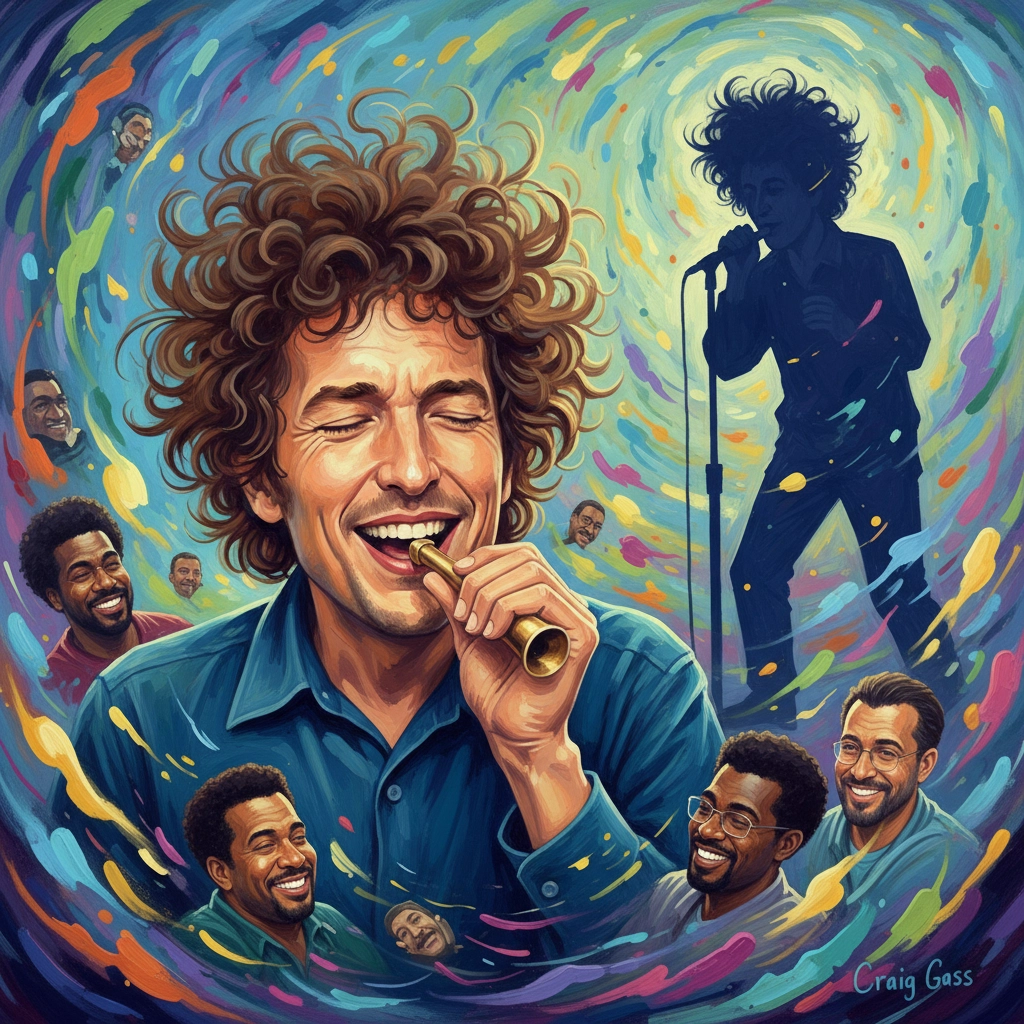
I had to write this because, on three separate occasions, people have told me I have “Bob Dylan hair.” And every single time, that’s immediately followed by a tidal wave of terrible Dylan impressions — like saying his name triggers a Pavlovian response in every Drunk Uncle who ever owned an acoustic guitar and a troubadour dream. Everyone thinks they’ve got a Dylan impression. They only have an impression of an impression. From comedian friends to audience members, they all do that same thing, where Dylan apparently sings every single word he speaks. “Heyyy, can I getta turkeyyy subbb?”

Here’s the thing — Dylan is not easy to do. His voice sounds like a haunted kazoo whispering poetry through a cigarette filter in a Nash Rambler driving through the Midwest. It’s part mystery, part upper respiratory issue. That’s why James Austin Johnson is the man. His Dylan isn’t just accurate; it’s him talking. He cycles through eras like he’s flipping through radio stations: early Folk Dylan, Smooth Crooner Dylan, Coked-Out Rolling Thunder Dylan, and my favorite — “Disney vulture” Dylan.

Rich Hall’s got the cranky, seen-it-all Dylan down pat, and somehow Ethan Hawke managed to make “Twinkle, Twinkle, Little Star” sound like a lost track from Blood on the Tracks. But the truth is, no one truly does Dylan — not even Dylan. The man’s been changing his voice and style for 60 years. A great impression isn’t about getting the notes right; it’s about channeling that amazing point of view in the moment — the sense that you’re hearing a prophet, a poet, and a guy who might ask if you’ve got any rolling papers, all in the same breath. The answer, my friend, is still blowin’ in the open mic night.

Impressions are hard. I used to try them all the time, annoying everyone — now I usually only do characters in act-outs. I don’t claim they are spot on, I am more essence of someone in the moment. I have so much respect for impressionists (when they’re good). It’s an art form that’s part mimicry, part madness, and a little bit of masochism. I may be biased, but Craig Gass is one of my favorites. The guy can slip into voices so cleanly it’s like he’s got a Rolodex of souls. I just hope someday he sends me a Bob Dylan to prove me wrong — because if anyone could make Dylan sound like Dylan, it’s Craig. Who is your favorite impression.

Perfect is Boring

February 10, 2026 by mark124

The Beatles (For Someone Who Didn’t Think They cared for the Beatles)

I was never a huge Beatles guy. Not anti-Beatles — that’s a position only psychopaths and people who lie about never drinking coffee have — but more like how I’ve always treated Shakespeare.

I respect the work. I understand the importance. I know it shaped the world.

But did I ever dive in?

Nope.

I always figured, “Yeah, sure, they’re great,” I’d nod respectfully, and over the years, I loved the solo stuff — Paul’s way of making three different songs inside one, George’s spirituality, hell, I even liked his late 80’s stuff. Even though it was like Stevie Wonder’s “I just called” and Kiss’s “I was made for loving you baby”, we have to chalk it up as they were great artists but still a victim of the times. But the Beatles as a phenomenon? The whole Beatlemania, Beatle-Truthers, the people who treated every lyric like it was chapter seven of the Dead Sea Scrolls?

That part made me cringe.

Honestly, it felt like how I feel about religion: the product is great — wholesome, full of value, makes you feel good — but the people around it? Sometimes a little… much.

Every time the Beatles came up, somebody would go full conspiracy theorist explaining “what John really meant,” and suddenly you’re stuck in a conversation that feels like jury duty.

But then Richie Byrne and I started podcasting. We had on Billy Kramer, Rob Bartlett, Ashley Guttermuth, and — this is a name-drop I’m using proudly — we even interviewed May Pang on NJ 101.5 with Steve Trevelise. Bit by bit, I started getting curious. Not about the myth, not about the global phenomenon, but about the humans.

So I read Hunter Davies’ book The Beatles, and for the first time in my life, I wasn’t looking at “THE BEATLES — THE BRAND.”

I was looking at four young guys who started off just trying to make each other laugh while playing loud music in sweaty clubs. And suddenly… I got it. Man, they struck lightning but were totally regular dudes. I always imagined they were a formula like modern “boy bands”. Paint by numbers pop band.

And here’s where our story kicks into gear:

—

I was wrong, I can admit it.

The Beatles weren’t just four “lads from Liverpool” with catchy tunes — they were almost unfairly likeable. And it wasn’t because some PR team polished them up. It was because they were genuinely themselves: four guys you’d gladly grab a drink and a joke with, if only to hear what smartass thing they’d say next.

Their press conferences? Pure comedy. Everyone else in the ’60s was answering questions like cardboard cutouts: “My favorite color is blue,” “I like blondes,” “Please love me”, “Hi Mom”.

Meanwhile, the Beatles were turning interviews into riffs. A reporter asked Lennon how he found America. He shrugged and said, “Turn left at Greenland.” Not brilliant, not deep — but funny.

Their irreverence bled into the music, too. Rebellious enough for teenagers, harmless enough for parents — the sweet spot to sell tickets and albums.

Those mop-tops were less a fashion statement and more the universal cry of every teenager ever: “I’ll get a haircut next week.” Somehow it became a cultural rebellion. All they did was skip the barber, and boom — revolution. I love this trend out of pure laziness. Long enough that you don’t have to style it (and my mom and brother are barbers), yet short enough that you don’t look like you smell like hot dog water. Dad may bitch- “they need a haircut”, but not say ” you will never see them again”, again the sweet spot.

What really sold them for me, boiled down: four friends cracking each other up, rolling their eyes at reporters, and somehow pulling off harmonies while being chased by screaming fans. They were enjoying the ride. Despite being the most famous humans alive, they never lost their everyman energy. They didn’t try to become aristocrats or tortured geniuses. They stayed working-class, self-deprecating, and oddly normal.

Also TV arrived right on time. Radio made them stars, but television made them loved. Suddenly they were in everyone’s living room — And the best part? They aged well. Not just the songs — them. Watch an interview from 1964 and you’ll still smile. The jokes aren’t brilliant, but the charm is. They were ordinary and extraordinary at the same time.

Four funny, flawed, normal young men who accidentally changed the world. Now everyone is perfectly polished, perfect is boring.

Self Help?

February 7, 2026 by mark124

I’ve been told gratitude fixes everything. So here I am, doing emotional CrossFit with the things actively trying to kill me.

Shoutout to all the tiny Legos out there teaching me mindfulness one barefoot step at a time. Nothing snaps you into the present moment faster than colorful plastic pain at 6:12 a.m. Who needs meditation apps when you’ve got physical suffering shaped like a square spaceship?

And a sincere thank you to cold coffee for keeping me humble. Sure, I meant to enjoy it hot, but if this is the price of being so busy “killing it,”.

As for the laundry mountain? That’s not clutter. That’s cardio. My exercise routine is climbing it like Everest. Socks. Every missing match is a mystery. Every basket is a reminder.

Parenthood, comedy tours, daily annoyances : Loud, inconvenient, hilarious stuff all found on the internet. And somewhere between exhaustion and flight delays is the uncomfortable truth self-help books don’t love to admit: this shit means you’re in the shit. You’re living. You’re moving. You’re showing up.

Gratitude is stepping on Legos, drinking defeat-temperature coffee, and laughing because the alternative is screaming into a pillow.

Time to dance like nobody is watching

Previous »

Recent Posts

  • Why Philip Seymour Hoffman Was One of the Greats
  • My Hero(s)
  • Mix Tape era
  • Directors
  • Deer Season

Archives

  • March 2026
  • February 2026
  • January 2026
  • November 2023
  • May 2018
  • July 2017
  • March 2017
  • December 2016
  • November 2016
  • August 2016
  • September 2015
  • July 2015
  • July 2014
  • April 2014

Join The Community!

Need a laugh? I will send you schedules for tours, fun clips, and other news (but not to worry, I'm lazy, so only a couple of times a year!) Join the mailing list here!

Follow Me


2018 © Copyright @ MARK RICCADONNA –  All Rights Reserved